Think of sunlight in your garden not as a simple on/off switch, but as a personalized meal plan for every plant. Just as you wouldn’t feed a marathon runner and a napping cat the same breakfast, you can’t treat a sun-loving tomato the same as a shade-craving fern. For new gardeners, this is the most common—and most misunderstood—factor between a thriving patch and a disappointing one. Those confusing terms on plant tags, like “full sun” or “partial shade,” aren’t just vague suggestions; they’re specific dietary requirements. This guide will translate that sunlight lexicon, helping you become a confident matchmaker between your garden’s unique light conditions and the plants that will truly flourish there.
For beginner gardeners, mastering sunlight basics means learning to translate terms like ‘full sun’ into the real hours of direct light your space receives and matching that to plants’ needs. It’s the single biggest factor in preventing leggy, weak, or non-blooming plants. Success starts with accurately reading your garden’s light ‘menu’—understanding that full sun means at least 6+ hours of direct sun, partial shade often means 3-6 hours of gentler morning light, and so on—and then choosing plants whose tags align with that reality.
Why Light Isn’t Just Fuel: The Plant Physiology Corner
Think of sunlight as more than just plant food. It’s the director of your garden’s entire production. Yes, through photosynthesis, light is the energy that powers growth, turning carbon dioxide and water into sugars. But it also gives plants critical instructions.
Light tells stems which way to grow (a process called phototropism, which is why seedlings lean toward a window). It signals to many plants when it’s time to flower, based on day length (photoperiodism). And crucially, adequate light intensity builds strong, sturdy stems instead of the weak, “leggy” growth you see in low-light conditions. Understanding these plant light needs is the first step to giving your plants what they truly require, not just what you think they need. For a deeper dive into the engine itself, resources like this explanation of photosynthesis from the University of Illinois Extension are excellent.
Decoding the Sunlight Lexicon: Full Sun, Part Shade, and Beyond
Plant tags can feel like a secret code. Let’s translate those terms into real-world, measurable conditions. These categories represent the minimum amount of direct sunlight a plant needs to thrive.
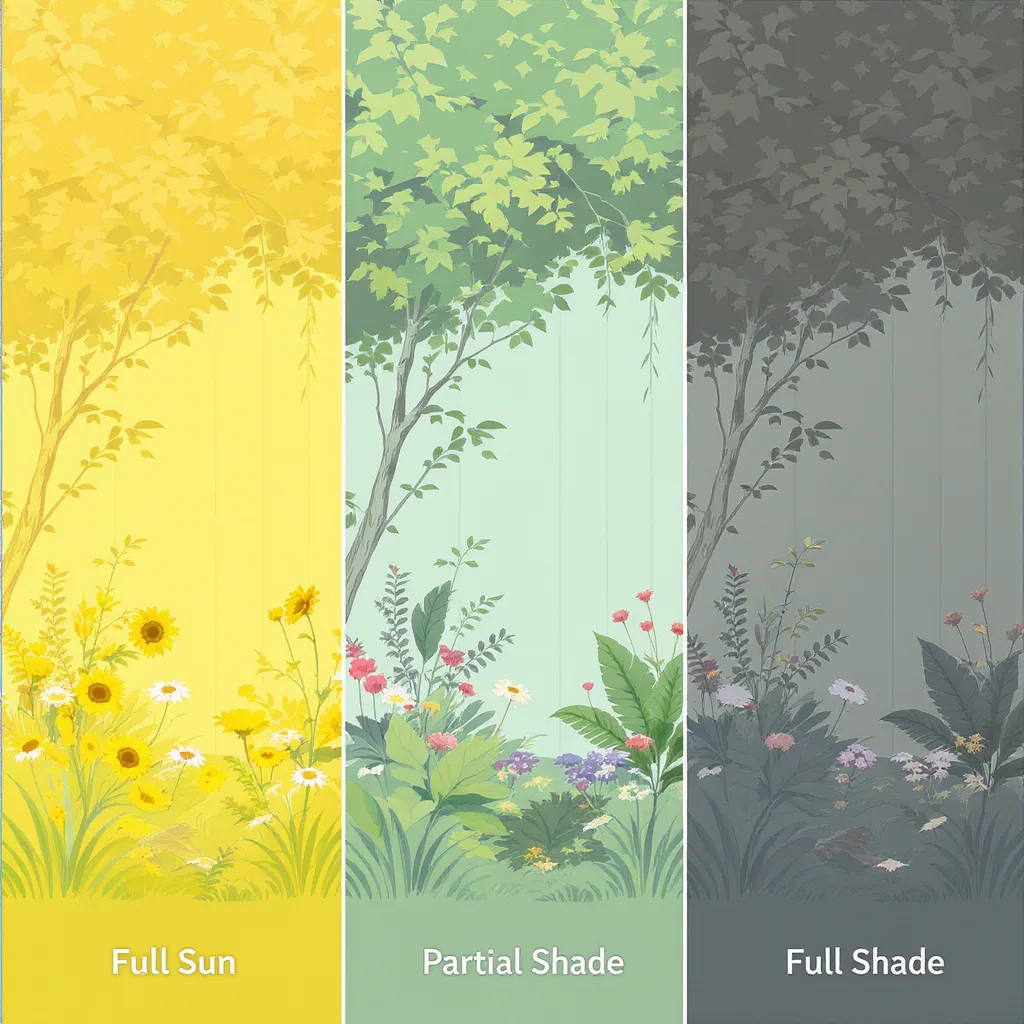
Full Sun
This means at least 6 hours of direct, unfiltered sunlight per day. For most flowering plants and vegetables, “more is better,” and they’ll often perform best with 8+ hours. The key is that these hours don’t have to be consecutive, but they should be during the peak intensity of the day (roughly 10 am to 4 pm).
Partial Sun / Partial Shade
These terms are often used interchangeably, but there’s a subtle preference. Both generally mean 3 to 6 hours of direct sun per day.
- Partial Sun plants lean toward needing the higher end of that range (5-6 hours) and can often tolerate more.
- Partial Shade plants prefer the lower end (3-4 hours) and often appreciate protection from the intense afternoon sun.
“Dappled shade,” common under trees, counts here—it’s sunlight filtered through moving leaves, creating a shifting pattern of light and shadow.
Full Shade
This does not mean total darkness. It means less than 3 hours of direct sun, with bright, indirect light for the rest of the day. Think of the light under a dense evergreen or on the north side of a wall. These plants are adapted to make the most of reflected or filtered light.
Be a Garden Detective: How to Map Your Light in Real Life
Now, forget the textbook definitions for a moment. Your specific garden, balcony, or windowsill has its own unique light profile. Your job is to become a detective and map it. The simplest method is the “sun watch.”
On a clear day, observe your chosen spot. Note what time the direct sun first hits it and when it finally leaves. Do this in the growing season (spring/summer) when trees have leaves. Remember, the sun’s path changes with the seasons; a spot that’s sunny in March might be shaded by August by a nearby tree’s full canopy. In the Northern Hemisphere, south-facing areas get the most intense, all-day sun.
Your Quick Light Assessment Toolkit
- The Shadow Test: On a sunny afternoon, look at shadows. Sharp, well-defined shadows mean direct sun. Soft, blurry shadows mean indirect or filtered light.
- Track the Clock: Literally set a timer or make notes on your phone every hour to see if the spot is in sun or shade.
- Note the Obstacles: Buildings, fences, and evergreens create permanent shade. Deciduous trees create seasonal shade.
- Don’t Guess Indoors: A “bright” room to our eyes is often low light for a plant. A south-facing window is your indoor equivalent of full sun.
This process of assessing garden light conditions is the most practical skill you can develop. It turns abstract terms into a concrete plan for your space.
Matching Plants to Your Patch: A Starter Guide
With your light map in hand, you can now shop with confidence. Use plant tags as your final guide, but these general rules will help you navigate the nursery.
For Full Sun Areas (6+ hours)
This is where most edible and prolific flowering plants live. Think tomatoes, peppers, cucumbers, squash, rosemary, and lavender. For flowers, consider zinnias, marigolds, sunflowers, and most roses. If a plant produces a fruit, vegetable, or abundant flowers, it likely needs full sun.
For Partial Sun/Shade Areas (3-6 hours)
This is a versatile category. Many leafy greens (lettuce, kale, spinach) tolerate or even prefer some afternoon shade to prevent bolting. Herbs like cilantro and parsley do well here. For flowers, try coleus, impatiens, and some begonias. This is often the sweet spot for many perennial gardens.
For Full Shade Areas (<3 hours direct sun)
Focus on foliage. Hostas, ferns, coral bells (Heuchera), and astilbe are shade garden classics. These plants are adapted to lower light and often have beautiful leaf textures and colors to compensate for fewer flowers.
When in doubt, consult a trusted plant database like the one from the USDA or your local university extension service to verify specific sunlight requirements for vegetables and flowers you’re interested in.
Common Sunlight Mistakes (And How to Fix Them)
We’ve all made these errors. Recognizing them is half the battle. Here’s how to diagnose and correct common light-related issues.
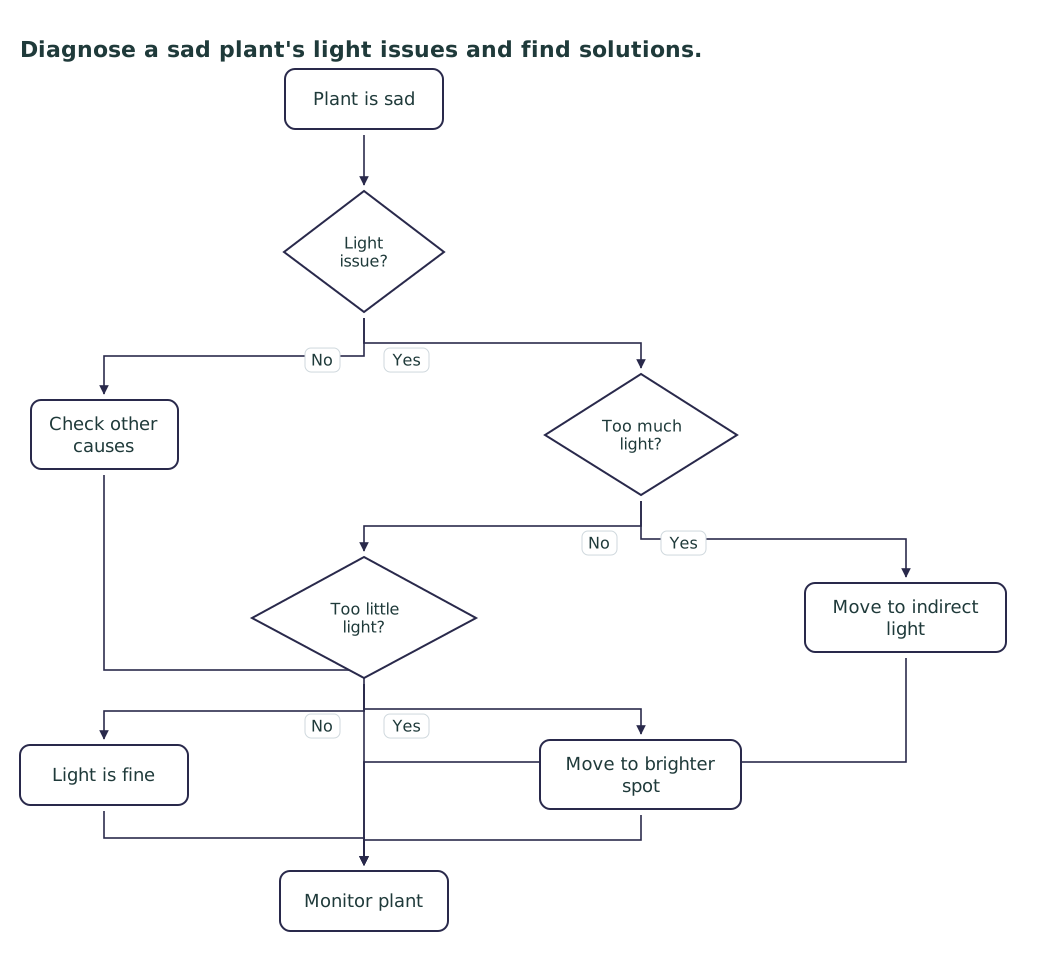
Mistake 1: The “Morning Sun” Assumption
You plant a tomato (“full sun”) in a spot that gets blazing sun from 7 am to 1 pm. That’s 6 hours, right? Often, morning sun is less intense. The plant may become leggy and produce poorly. Fix: Prioritize sites with strong afternoon sun for full-sun plants, or be prepared to supplement.
Mistake 2: Overestimating Indoor Light
A “bright room” is rarely bright enough for a succulent or citrus tree that craves direct rays. Fix: Place sun-loving houseplants directly in a south-facing window. For others, consider a grow light to supplement, especially in winter.
Mistake 3: Forgetting About Tree Growth
A sunny spring bed can become a shady summer bed as trees leaf out fully. Fix: Observe your space across seasons before planting perennials. Choose plants suited for the light conditions in peak summer.
Mistake 4: Misreading “Bright Indirect Light”
This common houseplant term is tricky. It means no direct sunbeams hitting the leaves, but the room should be brightly lit enough to easily read a book. A spot just a few feet back from a sunny window is perfect. Fix: Use the shadow test indoors—you should see a fuzzy shadow, not a sharp one.
Your Garden’s Light, Your Growing Confidence
Mastering sunlight basics for beginner gardens isn’t about memorizing charts. It’s about developing a new way of seeing your space. It’s a skill that deepens with each season as you observe how light dances across your garden from spring to fall.
Start small. Plant a single container matched perfectly to your balcony’s light, or dedicate one bed to an experiment. Watch how your plants respond—they will tell you if they’re happy. And remember, gardening is not a test; it’s a conversation. If a plant struggles in one spot, moving it is not failure, it’s a smart adjustment.
This foundational knowledge removes a major source of beginner anxiety and replaces it with confidence. You are no longer just putting plants in dirt; you are placing them in a home where they have the resources to thrive. Now, go read that light menu and place your order.
Success in gardening starts with accurately reading your garden’s light “menu” and matching plant tags to it. Remember: Full Sun means 6+ hours of direct sun, Partial Sun/Shade means 3-6 hours, and Full Shade means less than 3 hours of direct but bright indirect light. Use simple observation—the shadow test and timing the sun—to assess your unique conditions. When you match a plant’s garden light requirements to the reality of your space, you set the stage for healthy growth and avoid the most common pitfalls.