You’ve carefully chosen your seeds, prepared your soil, and are ready to start your first garden. But then you’re holding a tiny seed packet, staring at instructions like “thin to 18 inches apart,” and a wave of uncertainty hits. What happens if you just sprinkle them a little closer? How deep is too deep? This moment of confusion is where many new gardens go off track. The truth is, getting the planting and spacing basics for beginners right isn’t just a minor detail—it’s the single most important skill you can master to avoid the heartbreak of watching your plants struggle. Crowded seedlings compete for every drop of water and ray of sun, leading to weak, disease-prone plants and disappointing harvests. Think of it not as a restrictive rule, but as the foundational act of giving each plant the personal space it needs to thrive from its roots to its leaves.
For healthy growth, always follow seed packet spacing guidelines and plant at a depth roughly 2-3 times the seed’s width. Giving plants adequate room from the start prevents competition for light, water, and nutrients. This fundamental discipline is non-negotiable for strong roots, good air circulation, and a successful harvest, turning a hopeful planting into a thriving garden.
Why Spacing Isn’t Just a Suggestion
Think of your garden as a room full of people. If everyone is packed shoulder-to-shoulder, it gets stuffy, uncomfortable, and fights break out over the last canapé. Plants feel the same way. Ignoring plant spacing fundamentals isn’t a minor oversight; it’s an invitation for three major problems that can ruin your season.
First, poor air circulation. When leaves are crammed together, moisture gets trapped, creating a perfect environment for fungal diseases like powdery mildew and blight to spread. It’s the garden equivalent of never opening a window in a steamy bathroom. Second, root competition. Underground, roots are fighting for every drop of water and every bit of nutrient. If they’re too close, everyone loses, resulting in stunted, stressed plants. Finally, light blockage. Taller, faster-growing plants will shade out their neighbors, leaving you with spindly, unproductive stems reaching for the sun. Following garden bed spacing rules from the start is your best defense, giving each plant its own “personal space” for roots, leaves, and air. For a deeper dive into plant health, resources like university extension guides on plant diseases often highlight crowding as a primary cause.
Your Pre-Planting Protocol: The Paper Garden
Never start with a shovel. Always start with a pencil. This single habit separates chaotic planting from a confident, successful layout. Your “Paper Garden” is a stress-free, mistake-proof rehearsal.
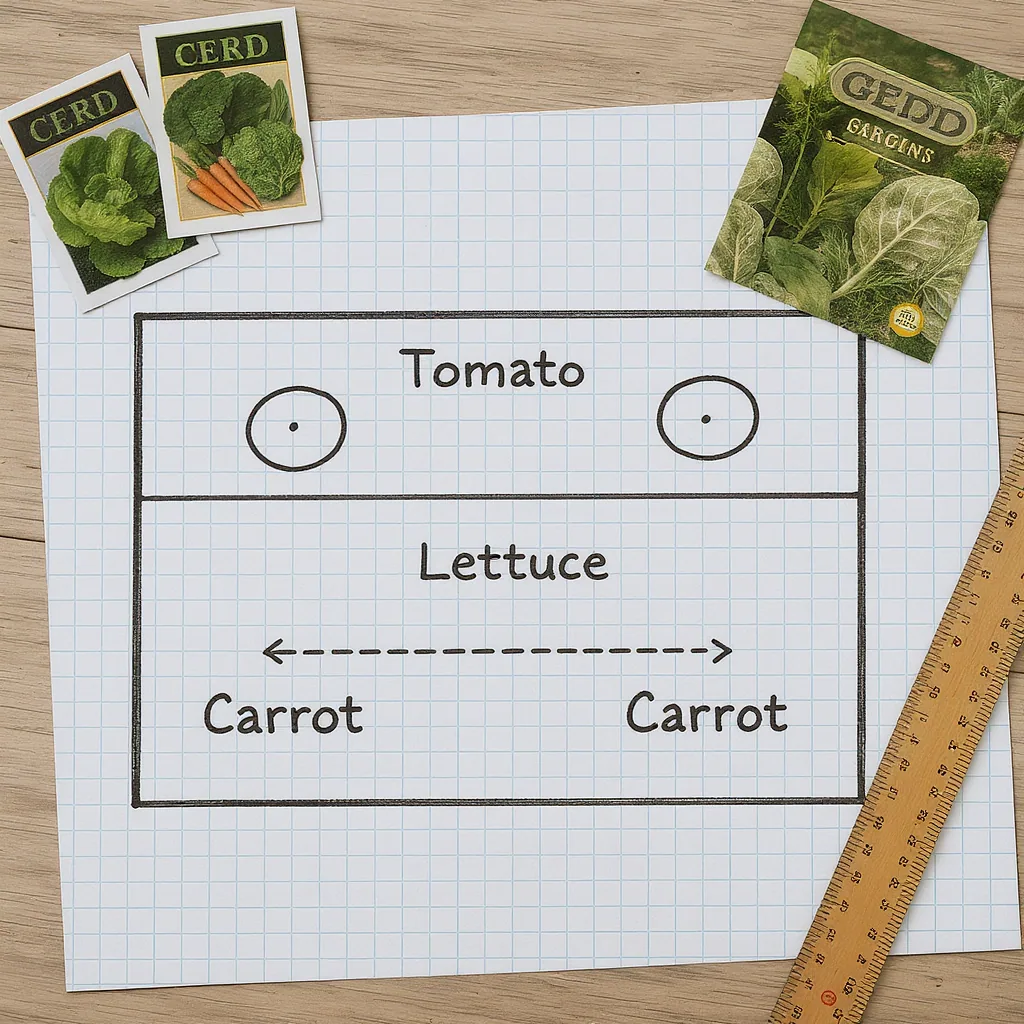
Here’s your mini-checklist to plan your proper plant spacing beginner garden:
- Gather Your Intel: Collect every seed packet and plant tag. This is your source of truth for “final spacing.”
- Sketch Your Canvas: Draw the shape of your garden bed or container to scale. Graph paper is ideal, but any paper works.
- Note the Numbers: For each plant, write down its required spacing. For example, tomatoes often need 24-36 inches, lettuce 6-12 inches, carrots 2-3 inches.
- Map It Out: Using your spacing numbers as a guide, draw circles or dots representing the mature size of each plant. This visual instantly shows you if your plan is realistic or a future crowd scene.
This 15-minute exercise saves hours of frustration later. It answers the “how far apart to plant vegetables” question definitively, on your terms, before you’re committed in the soil.
Decoding Depth: How Deep is Too Deep?
While spacing handles the horizontal plane, planting depth basics govern the vertical. Get this wrong, and seeds won’t germinate, or transplants will suffocate. The rules differ for seeds versus seedlings.
The Universal Seed Rule
Aim to plant a seed at a depth roughly 2 to 3 times its width. A fat pea seed gets planted about an inch deep. A tiny lettuce seed barely gets covered with a sprinkle of soil. Planting too deep is a common cause of germination failure—the seedling exhausts its energy before reaching the light.
Transplanting Tweaks
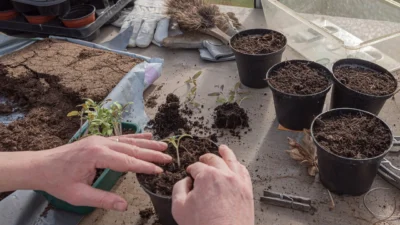
For seedlings, you’re often guided by the root ball. But a key scenario is the “leggy” seedling (tall and spindly from low light). For tomatoes and similar plants, you can plant them deeper, burying part of the stem, which will grow additional roots. For most other transplants (like peppers, lettuce, or strawberries), you must keep the soil level the same as it was in the pot. Burying the crown (where stem meets roots) can cause rot.
The In-Ground Execution: Measuring and Marking
Now, transfer your paper plan to the earth with precision. This is where your beginner garden spacing guide becomes physical reality. Haphazard eyeballing leads back to crowding. A few simple tools and a methodical approach ensure accuracy.
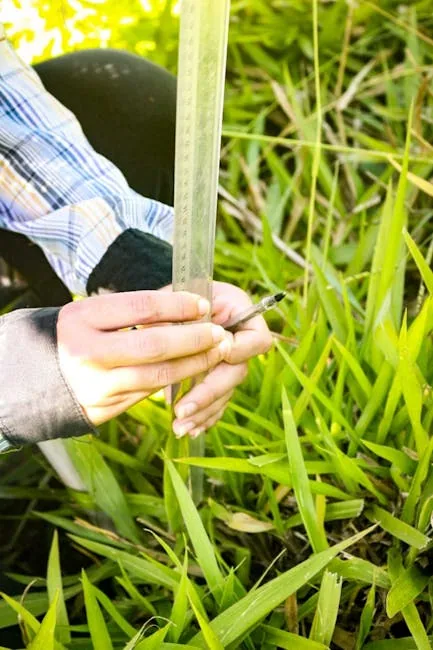
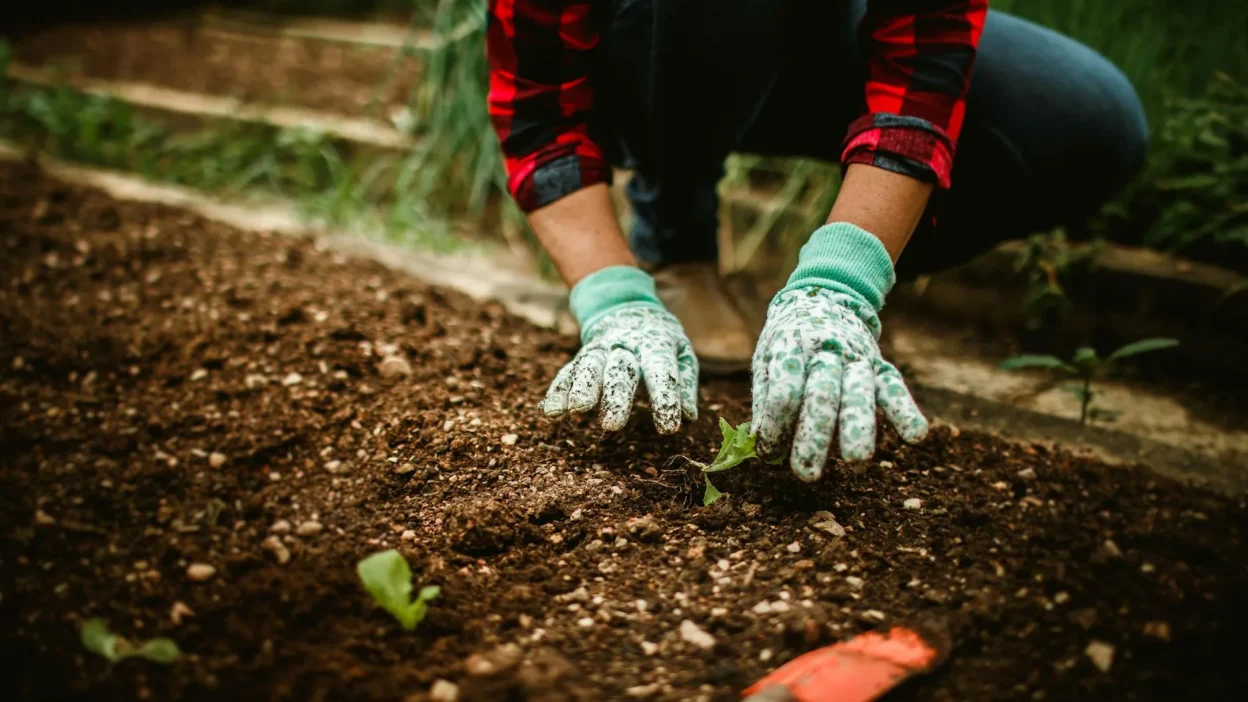
Photo by Leiliane Dutra on Pexels
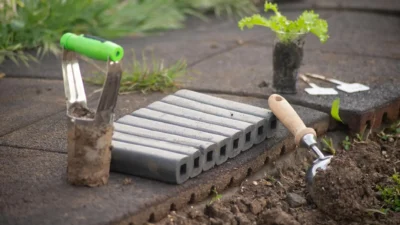
Start by clearing and leveling your bed. Then, create a simple measuring grid. For a rectangular bed, use stakes and string to mark straight rows or a planting grid. Use a ruler, a pre-marked stick, or even your hand (knowing the span of your fingers) to measure the specific distances between planting holes as dictated by your plan. Mark each hole with a small stick, a dab of flour, or a finger poke. This protocol—measure, mark, then plant—ensures every seedling and seed goes exactly where it needs to be for optimal health.
Common Spacing and Planting Pitfalls (And How to Dodge Them)
Even with the best intentions, new gardeners often stumble into the same traps. Recognizing these pitfalls is half the battle. Here’s how to spot and sidestep them.
Pitfall 1: Trusting the Seedling, Not the Mature Plant
The Mistake: Planting tiny seedlings from the nursery pot exactly as they appear, ignoring the sprawling monster they will become.
The Why It Hurts: You’ll be thinning, staking, and fighting disease in a dense jungle by mid-summer.
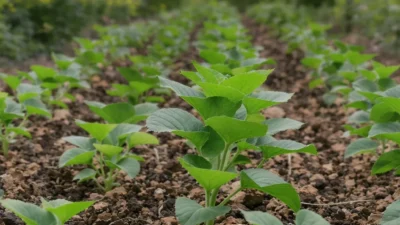
The Fix: Always, always refer to the mature plant spacing on the tag or seed packet. Give that zucchini its 3-foot diameter from day one.
Pitfall 2: Single-File Rows in a Raised Bed
The Mistake: Planting in one or two long rows, like a farm field, within a small 4×8 foot raised bed.
The Why It Hurts: It wastes immense amounts of valuable growing space on walkways between rows.
The Fix: Use intensive “grid” or “block” planting. Treat the entire bed as a planting area, spacing plants equidistant from each other in all directions. This plant layout basic maximizes yield.
Pitfall 3: Forgetting to Thin Direct-Sown Seeds
The Mistake: Sowing carrot or radish seeds thickly (which is fine) but then being reluctant to pull out the extra seedlings.
The Why It Hurts: None of the roots will have space to size up. You’ll harvest a handful of thread-like carrots.
The Fix: Thin seedlings ruthlessly to the final spacing when they are a few inches tall. It feels wasteful, but it’s essential for a harvest.
Your Foundation for Future Success
Getting planting and spacing right might feel like a restrictive set of rules at first, but it’s truly a gift of freedom. By investing time in this one fundamental skill, you build a resilient garden that requires less troubleshooting later. A well-spaced garden is naturally more resistant to pests and disease, easier to water and weed, and ultimately, far more productive. View this season’s neatly measured beds not as a test, but as your first living success story—a confident foundation that makes every future gardening venture less daunting and more joyful.
Mastering your garden starts with a disciplined approach to space and depth. Remember the core protocol: plan on paper first using spacing info from your seed packets. Respect each plant’s need for room to grow—this prevents competition and disease. Plant seeds at a depth of 2-3 times their width, and set transplants at their original soil level. Finally, measure and mark in the soil before planting any seed. This upfront investment of time is what unlocks healthy growth, bigger harvests, and the confidence to grow more.