You’re staring at your plant, and that familiar knot of worry tightens in your stomach. The leaves look wrong—maybe spotted, maybe wilting, maybe full of holes. Your mind races with possibilities: Is it under attack by tiny bugs? Has some silent sickness taken hold? Or have you simply been loving it to death with too much (or too little) water? For a new gardener, this moment of confusion is universal. The good news is that diagnosing plant problems isn’t about having a green thumb; it’s about learning to see like a detective. This beginner garden problem diagnosis checklist cuts through the guesswork by teaching you the visual clues that separate pest damage, disease, and water stress. We’ll focus on the ‘why’ behind the signs, so you can move from overwhelmed to empowered, and take the right action to help your plant recover.
Here’s how to diagnose common plant problems: start by looking for patterns. Pest damage often shows as irregular holes, chewed edges, or visible insects. Diseases typically create spots, powdery coatings, or rotted areas with distinct borders. Water stress usually causes uniform wilting, yellowing, or crispy edges across many leaves. Check the soil first to rule out watering issues before looking for pests or disease. Following this beginner garden problem diagnosis checklist helps you identify the true culprit quickly.
The Plant Detective’s Mindset: Patterns Tell the Story
Before you panic and reach for the spray bottle, take a deep breath. The most powerful tool in your garden problem diagnosis kit isn’t a chemical—it’s your power of observation. The key to telling plant disease vs watering issues apart from bug attacks is to look for patterns.
Think of your plant as a crime scene. A single yellow leaf might not tell you much, but a pattern of damage across the whole plant is a major clue. Ask yourself: Is the problem uniform (like all the lower leaves turning yellow) or random (like a few leaves with holes scattered everywhere)? Is it localized to one spot or spreading? Did it appear overnight or develop slowly over weeks? This systematic approach, often called Integrated Pest Management (IPM), is the professional’s first step, and it’s something any beginner can adopt. You can learn more about this foundational method from resources like the University of California’s IPM guide for houseplants.
By starting with these questions, you move from guessing to diagnosing. You’re not just seeing a symptom; you’re interpreting a story written in leaves and stems.
Clue #1: The Signs of Pest Damage
Pests are physical creatures that eat, suck, or bore into your plant. Therefore, the pest damage on leaves and stems is often physical and irregular. You’re looking for evidence of a creature’s activity.
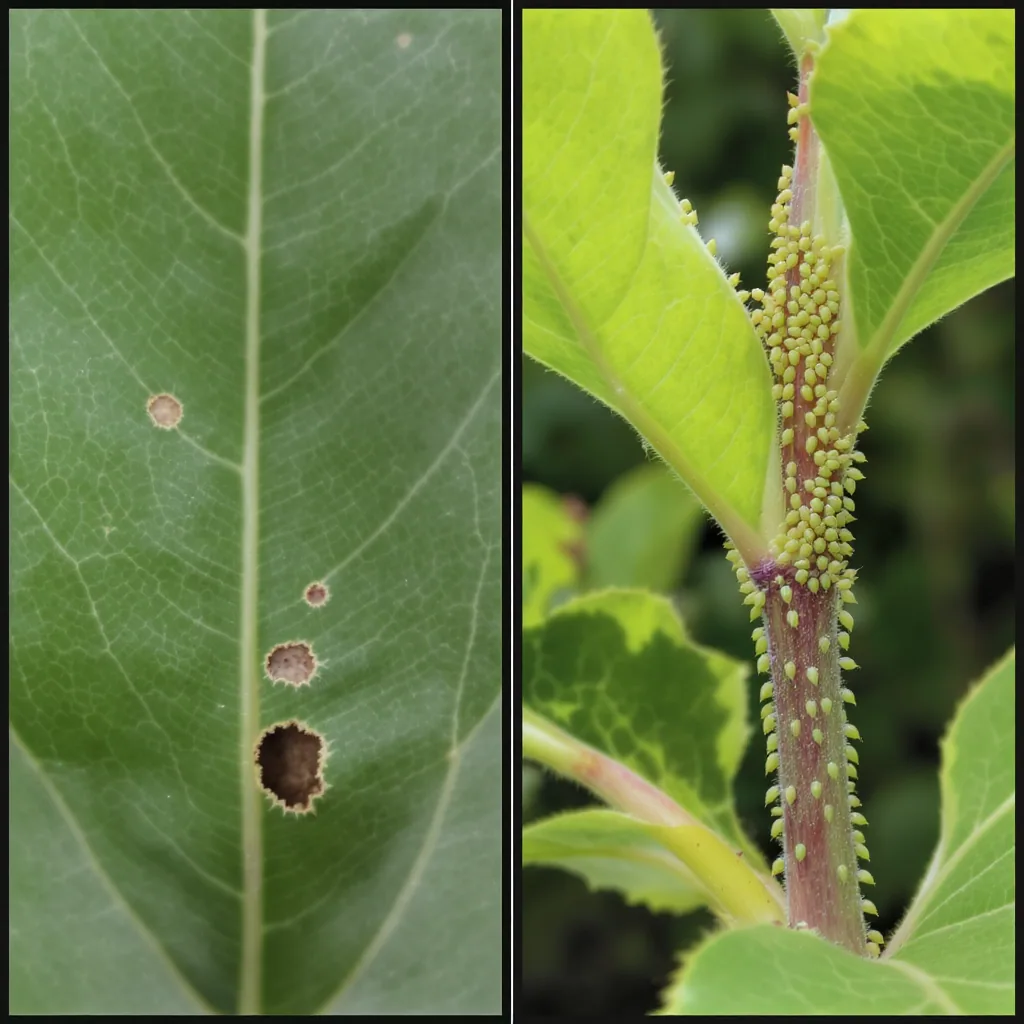
The hallmarks include:
- Holes and Notches: Irregular, chewed edges or holes in the middle of leaves. Caterpillars and beetles leave this calling card.
- Sucking Damage: Tiny, discolored speckles (stippling) or silvery streaks, often caused by mites or thrips sucking out plant sap.
- The Pest Itself: This is the most obvious clue. Look for insects (aphids, whiteflies), webbing (spider mites), sticky residue (honeydew from sap-suckers), or eggs on the undersides of leaves and along stems.
The pattern is usually messy and asymmetrical. One leaf might be half-eaten while its neighbor is untouched. If you see this kind of chaotic, localized damage, you’re likely dealing with a bug, not a sickness.
Clue #2: Recognizing Plant Disease Symptoms
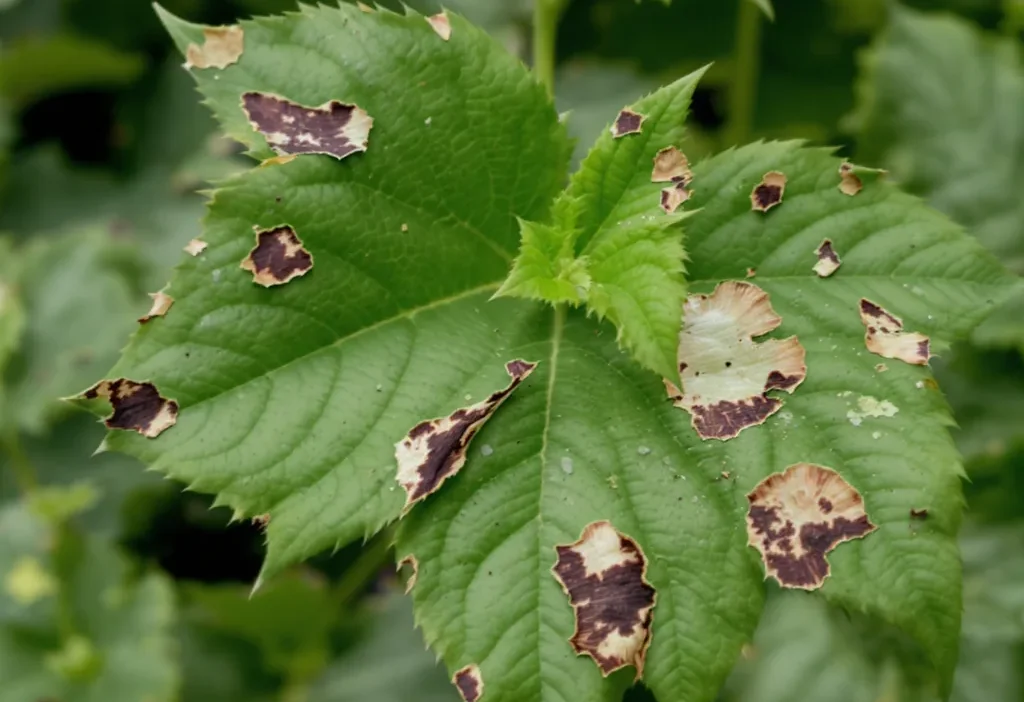
Diseases, usually fungal, bacterial, or viral, work from the inside out. They don’t chew; they infect. The symptoms often look like the plant is decaying or developing a growth that’s part of the leaf itself.
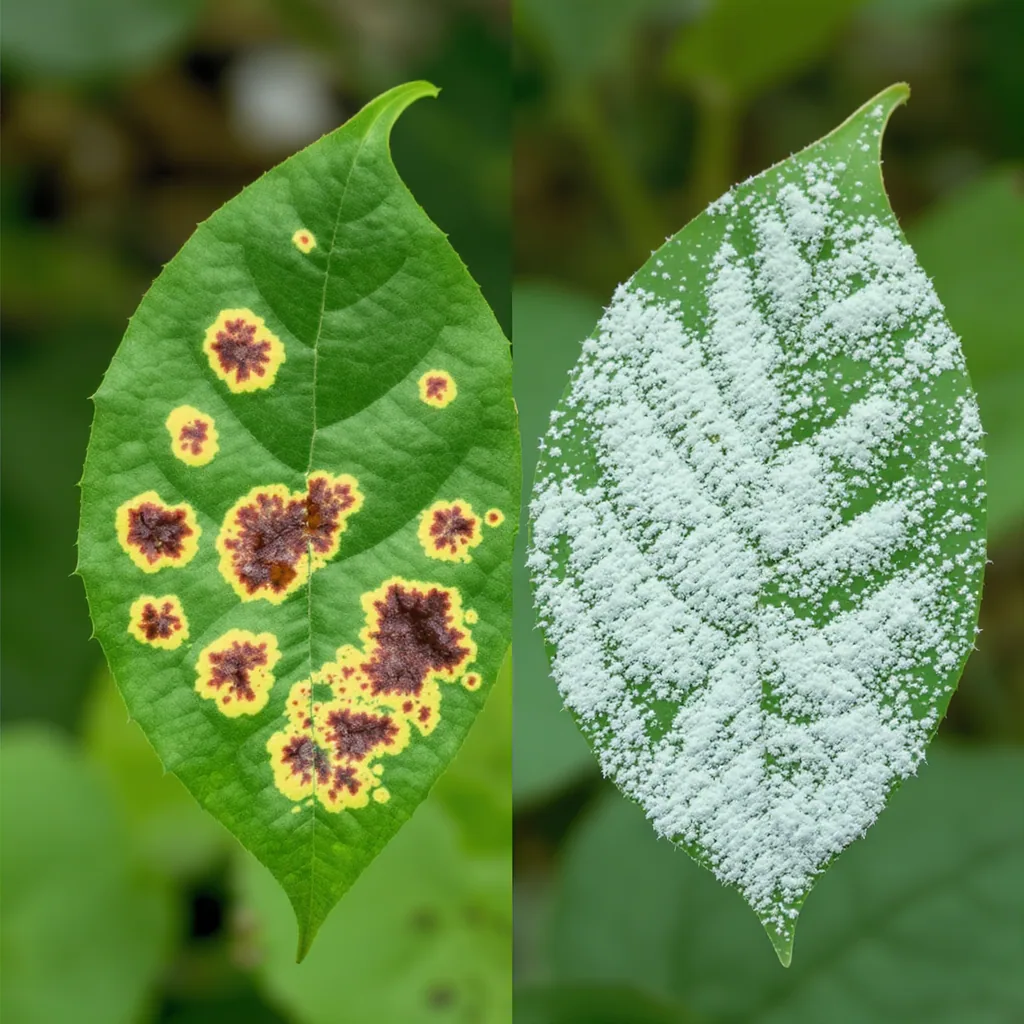
Watch for these signs:
- Spots with Borders: Distinct circular or angular spots, often with a different colored edge or halo (e.g., brown spot with a yellow ring).
- Powdery or Fuzzy Coatings: A substance that looks like it’s sitting on the leaf, such as white powdery mildew or fuzzy gray mold.
- Rots and Wilts: Soft, mushy areas (rot) at the base or on fruits, or a wilt that doesn’t perk up after watering (a sign of root rot or vascular disease).
Unlike the random chaos of pests, disease symptoms can appear more patterned or systematic across a plant, but the key difference is the type of damage. You won’t find clean holes from chewing; instead, you’ll find spots that are part of the leaf tissue or foreign growths on its surface.
Clue #3: Decoding Water Stress Signals
More often than not, the culprit is simply water—either too much or too little. This is the first thing to rule out in your beginner garden problem diagnosis because the fix is easy. Water stress typically affects the plant in a more uniform, widespread way.
Underwatering: The plant is dehydrated. Leaves wilt, become dry and crispy (especially at the edges), and may turn brown from the tips inward. The soil will be dry to the touch. The whole plant often looks thirsty.
Overwatering: The roots are drowning and can’t breathe, leading to rot. Leaves turn soft, limp, and yellow, often starting with the older, lower leaves. The plant may wilt even though the soil is wet. The soil may smell musty.
This is the critical step: always check the soil moisture with your finger before you do anything else. If the symptoms match and the soil is bone-dry or soggy wet, adjust your watering and observe for a few days before looking for other causes.
Your Quick Visual Checklist in Action
Now, let’s put it all together into a simple, actionable flow. The next time you face a sad plant, run through this visual checklist for beginners:
- Step Back and Observe the Pattern. Is the damage uniform across the plant (hinting at water stress) or random and localized (hinting at pests or disease)?
- Feel the Soil. This is your non-negotiable first diagnostic test. Is it dry, moist, or soggy? This instantly rules in or out water issues.
- Inspect Up Close. Turn leaves over. Look for the physical evidence: bugs, webbing, eggs, irregular holes (pests) OR spots, powdery coatings, mushy areas (disease).
- Identify the Culprit. Use the clues above. No bugs and uniform yellowing/wilting? Likely water. Bugs present? It’s pests. Distinct spots/fungus with no bugs? Likely disease.
Remember, this guide is for educational diagnosis. For serious or persistent issues, consulting a local nursery expert or extension service is always a good idea.
Becoming a Confident Plant Caretaker
Misdiagnosing your plant’s problem is a rite of passage for every gardener. The goal isn’t perfection from day one; it’s building your confidence and “gardener’s eye” over time. Start with the simplest explanation—adjust your watering—and watch how your plant responds for a few days. This patience alone solves a huge percentage of common issues.
The best defense is a healthy plant. Once you’ve corrected the immediate problem, focus on prevention: provide the right light, avoid over-loving with water, and keep an eye out for early signs. You’re not just fixing a problem; you’re learning the language of your plants. Each time you successfully troubleshoot, you’re leveling up from a beginner to a truly capable plant caretaker.