If your plant is wilting or turning yellow, your first instinct is probably to give it a drink. But here’s the counterintuitive truth for most new plant owners: you’re more likely to be killing your plants with kindness than with neglect. The dilemma of overwatering vs underwatering plants is the single most common and confusing problem for beginners, because the initial signs of overwatered plants and signs of underwatered plants can look frustratingly similar. This guide cuts through the guesswork with a clear, side-by-side diagnostic checklist, so you can stop wondering and start saving your plant.
How do you tell if you’re overwatering or underwatering your plants? The quickest way is to check the leaf texture and soil moisture. Overwatered plants have soft, mushy, often yellowing leaves and persistently wet soil. Underwatered plants have dry, crispy, brown-tipped leaves and bone-dry soil that pulls away from the pot. Touch is your best diagnostic tool—soggy versus brittle.
The Core Confusion: Why They Look So Similar
You see your plant wilting, its leaves turning yellow, and you panic. The instinct is to act, but which action do you take? This is the heart of the overwatering vs underwatering dilemma. At first glance, the symptoms can appear frustratingly similar because both conditions are a form of stress that starves the plant.
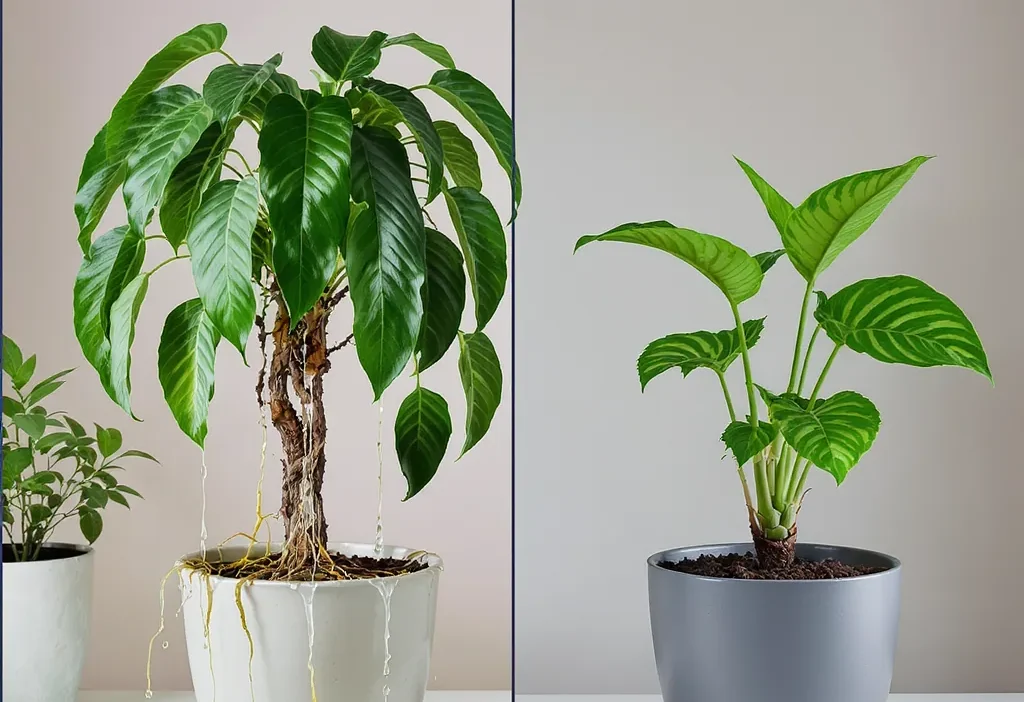
An overwatered plant’s roots are drowning, suffocated by waterlogged soil and unable to take up oxygen. An underwatered plant’s roots are in a desert, with no moisture to absorb. In both cases, the roots can’t function, so the plant’s leaves and stems begin to suffer, sending out the same general distress signals: drooping and discoloration. This is why you can’t stop at a glance from across the room. You need to move in closer and use your other senses to get the real story.
Side-by-Side Symptoms: Your Quick Diagnostic Checklist
Forget the guesswork. The key to telling overwatered vs underwatered plants apart lies in a few critical, tactile differences. Use this at-a-glance comparison to narrow down the culprit. Remember, this is an educational guide to help you make an informed decision about your plant’s care.
| Symptom | Signs of Overwatered Plants | Signs of Underwatered Plants |
|---|---|---|
| Leaf Texture & Feel | Soft, limp, and mushy. Leaves may feel bloated or fall off with a gentle touch. | Dry, crispy, and brittle. Leaves crinkle or snap easily, especially at the edges. |
| Leaf Color | Yellowing, often starting with lower, older leaves. Can be widespread pale yellow. | Brown, scorched-looking tips and edges. Overall color may be dull or faded green. |
| Soil Moisture | Persistently wet, soggy, or muddy days after watering. May have a musty smell. | Bone-dry, hard, and pulling away from the edges of the pot. Water runs straight through. |
| Pot Weight | Feels surprisingly heavy for its size, like it’s holding water. | Feels very light, as if the pot is empty. |
| Root & Stem Condition | Roots may be brown, black, slimy, and smell rotten. Stem base may be soft. | Roots are dry, shriveled, or brittle. Stems may be woody or excessively dry. |
| Plant’s Demeanor | Looks chronically sad, wilted, and “soggy” despite wet soil. | Looks parched, wilted, and “thirsty,” with leaves potentially curling inward. |
The Touch Test: Your Most Reliable Tool
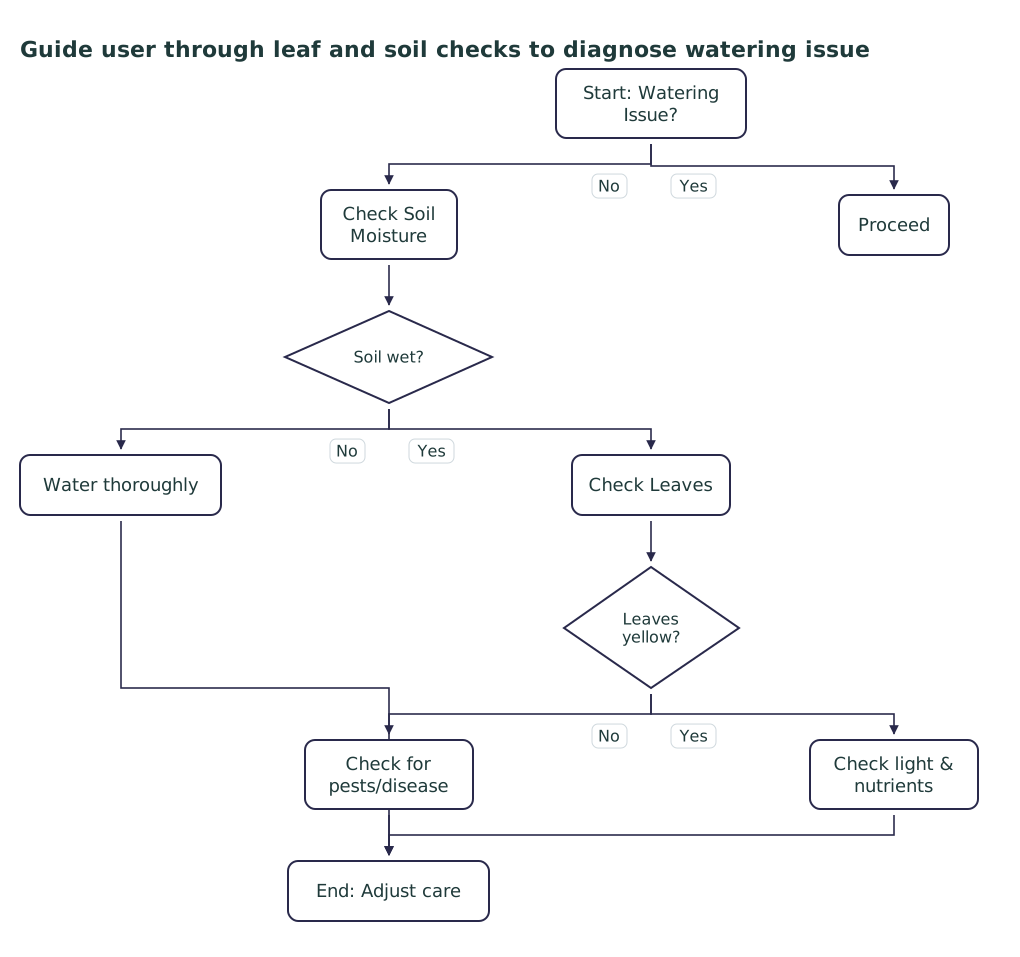
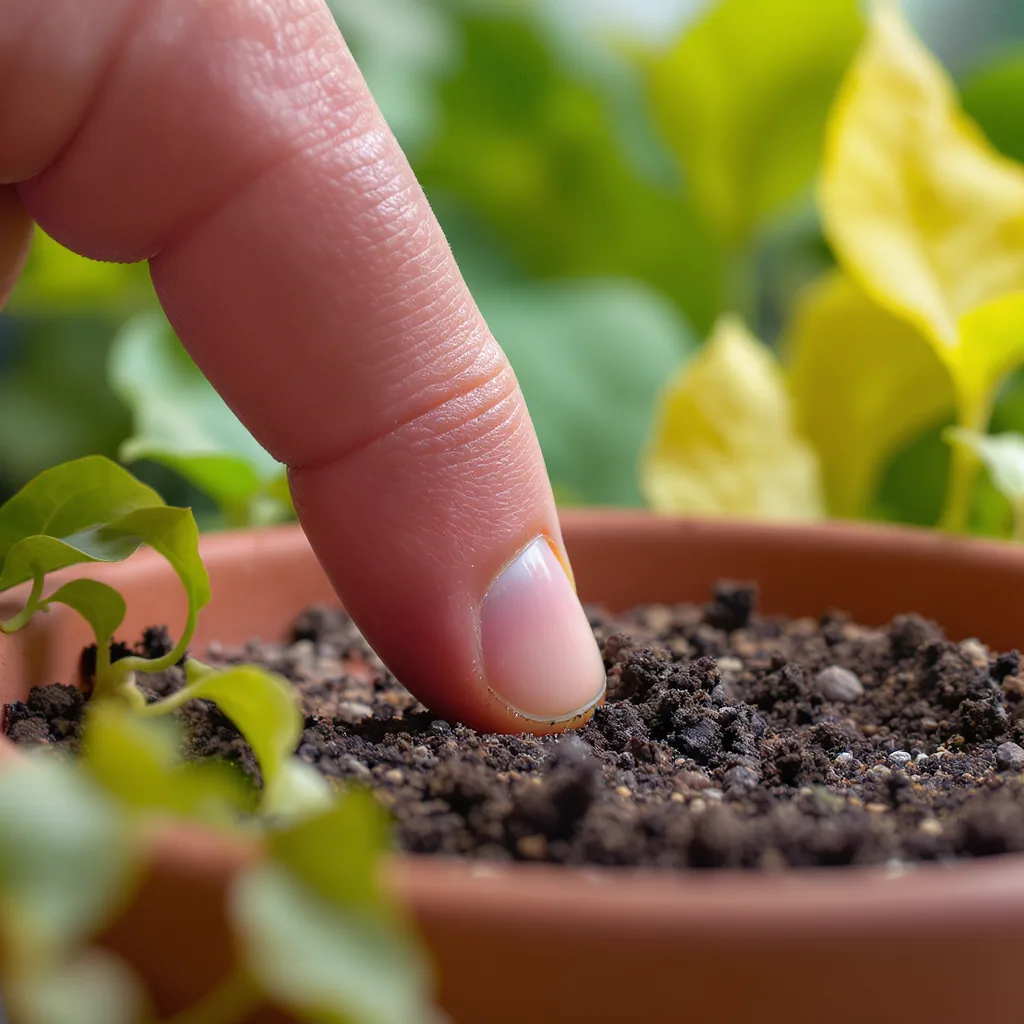
Your fingers are the best diagnostic tools you have. This simple, two-step touch test cuts through the confusion of diagnosing plant watering problems.
Step 1: Check the Soil. Ignore the surface. Push your finger about 1-2 inches into the soil near the stem. What do you feel? Is it cold and wet, or dry and dusty?
Step 2: Check the Leaves. Gently feel a few leaves, including older ones near the base. Are they soft and yielding, or dry and crisp?
Now, follow this simple logic:
- If the soil is wet/soggy AND the leaves are soft/mushy/yellowing, you are likely overwatering.
- If the soil is bone-dry AND the leaves are crispy/brown-tipped, you are likely underwatering.
This tactile approach is far more reliable than any watering schedule. For a visual guide, the Royal Horticultural Society emphasizes the importance of checking soil moisture before watering.
Immediate Rescue Steps (And What Not to Do)
Once you’ve diagnosed the issue, it’s time for plant first-aid. The actions for each are opposite, so getting this right is crucial.
If You Overwatered…
STOP WATERING IMMEDIATELY. This is the most critical step. Move the plant to a bright, airy spot (out of direct, hot sun) to help the soil dry. If the plant is severely wilted and the pot has no drainage, you may need to gently remove it to check the roots. Trim away any black, mushy roots with sterile scissors and repot into fresh, dry, well-draining soil. Do not water again until the top few inches of soil are dry.
If You Underwatered…
Your plant needs a thorough, deep drink. Place the pot in a sink or basin and water slowly from the top until water runs freely from the drainage holes. Let it sit and soak for 30-45 minutes, allowing the dry root ball to rehydrate. You can also try bottom-watering by letting the pot sit in a tray of water. After soaking, drain completely. Trim off any fully crispy, dead leaves to help the plant focus energy on recovery.
The Classic Mistake to Avoid: Never give a huge drink to an overwatered plant because it “looks thirsty.” This is the “panic water” reflex that finishes off struggling roots. Always let the soil guide you.
You’ve Got This
Confusing overwatering with underwatering is a universal rite of passage for plant owners. It doesn’t mean you have a black thumb—it means you’re paying attention. The very fact that you’re looking for these signs shows you care.
Moving forward, let this experience shift your focus from a rigid calendar to observing your plant. Trust the touch test, get to know how the weight of your pot feels when it’s dry versus watered, and remember that most plants prefer to dry out a bit between drinks. Your plant is communicating; now you have the simple key to listen. Happy growing.