You notice your favorite potted plant looking a bit sad—leaves are pale, growth is leggy, and it just doesn’t seem happy. The instinct is clear: it needs more sun. So, you pick it up and move it straight into the brightest spot on your patio, feeling confident you’ve solved the problem. A few days later, you’re met with crispy, scorched leaves and a plant that looks worse than before. This common scenario of moving potted plants for sunlight highlights a fundamental gardening truth: abrupt change is a shock to a plant’s system. While repositioning garden pots is one of the key advantages of container gardening, doing it incorrectly can do more harm than good. This guide cuts through the frustration with a clear, safe protocol for container plant light adjustment, transforming a well-intentioned mistake into a reliable method for building healthier, more resilient plants.
To safely adjust your potted plant’s sunlight, move it gradually over a week or more, increasing exposure by an hour or two each day, and always water it well before any significant relocation to reduce transplant shock. The core principle is to avoid the sudden shock of a full-day sun bath; instead, start with gentle morning light and incrementally extend its time in the new spot. This slow acclimation allows the plant’s leaves and internal processes to adapt without the damage of sunburn or severe wilt.
Why Moving Plants Isn’t as Simple as It Seems
It’s a natural instinct: you see a plant looking a bit leggy or pale, and you think, “It just needs more sun.” So, you pick it up and plop it into the brightest spot on your patio. This sudden relocation, however, is a major shock to your plant’s system, akin to you falling asleep in a dark room and waking up on a sunny beach without sunscreen.
Plants acclimate to their specific light conditions by adjusting their photosynthetic machinery and leaf structure. A leaf grown in shade is thinner and more efficient at capturing low light, but it lacks the protective compounds needed to handle intense, direct sun. When you move a plant abruptly, those delicate leaves can’t cope, resulting in scorched, bleached, or wilted foliage—a condition often called sunburn. Furthermore, the roots in a container are already in a more vulnerable, confined environment compared to in-ground plants. A sudden change in temperature and evaporation rate at the root zone adds another layer of stress. This entire process of gently preparing a plant for new conditions is called hardening off, and it’s just as crucial for container plant light adjustment as it is for seedlings.

Photo by MART PRODUCTION on Pexels
The Safe Movement Protocol: A Step-by-Step Playbook
To avoid shock and ensure success, follow this methodical playbook for repositioning garden pots. It turns a potentially damaging move into a gentle transition.
1. Scout and Assess the New Location First
Don’t move the plant yet. For a few days, observe the proposed new spot. How many hours of direct sun does it get? Is it harsh afternoon sun or gentle morning light? Use an app or simply note the time the sun hits and leaves the area. This tells you the final destination’s intensity.
2. Hydrate the Plant 24 Hours Before
A well-watered plant is more resilient to stress. Water your plant thoroughly a day before any significant move. A parched plant will wilt dramatically when exposed to increased light and heat.
3. Execute the Gradual Shift
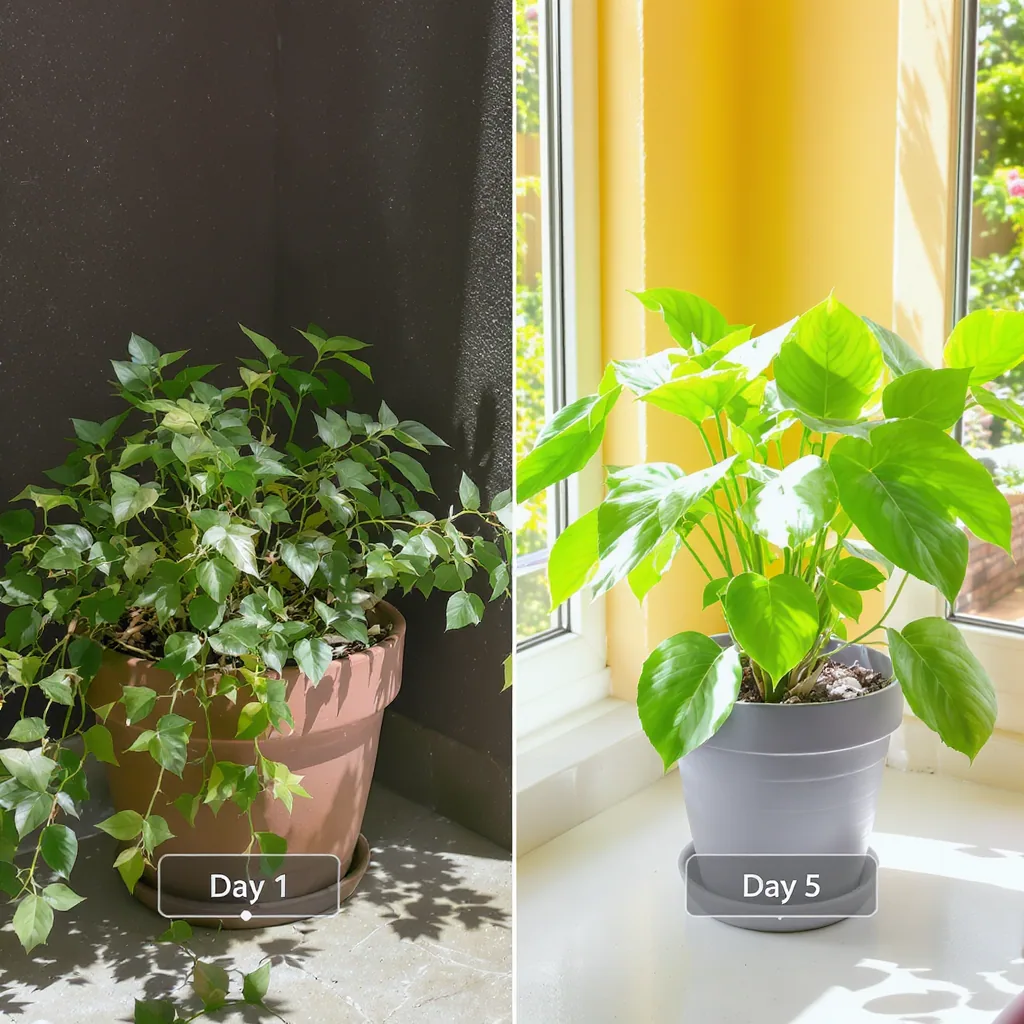
This is the core of the protocol. Start by placing the plant in its new, brighter location for just 1-2 hours of morning sun (the gentlest kind). Then, return it to its original spot for the rest of the day. Each subsequent day, increase its exposure in the new spot by about an hour. Over 7-10 days, it should be able to tolerate a full day in its new home.
4. Monitor for Stress Signals
Watch the leaves closely. Slight wilting at the end of a longer day is normal; severe wilting, bleaching (white or pale patches), or crispy brown edges mean you’re moving too fast. Dial back the exposure time by a few hours for a couple of days.
5. Finalize the Placement
Once the plant is happily tolerating full-day exposure, you can leave it permanently. Remember, this protocol works for both a permanent move to a sunnier balcony and for seasonal container movement, like shifting plants outdoors in spring.
Common Mistakes That Hurt Your Plants (And How to Avoid Them)
Let’s translate the theory into clear, actionable mistakes to avoid. Here’s what hurts, and what helps instead.
Don’t: Move a plant from deep shade to full afternoon sun in one go.
Do: Always use the gradual protocol, starting with morning sun. Patience is non-negotiable.
Don’t: Reposition a thirsty, stressed plant.
Do: Water thoroughly 24 hours before any move. Think of it as preventative medicine.
Don’t: Forget to rotate the pot after the move.
Do: Once acclimated, give the pot a quarter-turn weekly. This ensures all sides get even light, preventing lopsided growth and making your light management for potted plants complete.
Don’t: Choose a heatwave or windy day to start the process.
Do: Initiate the move during a stretch of mild, stable weather. Extreme conditions compound stress.
Special Scenarios: Seasonal Shifts and Problem Solvers
The core protocol is your foundation, but some situations need tailored advice.
Moving Plants Indoors for Winter
This is a reduction in light, which can cause etiolation (stretching). Reverse the logic: before the first frost, start moving sun-loving pots to shadier outdoor areas for a week to reduce their light acclimation. Once inside, place them in your brightest window. Remember, indoor light is much weaker than it seems. A south-facing window indoors often provides less light than a shaded spot outdoors. Consider supplemental grow lights for high-light plants. For more, see this guide on overwintering plants indoors from the University of Minnesota Extension.
The Suddenly Shaded Balcony
Did a new building or tree suddenly plunge your patio into shade? If your plants are sun-lovers, you must move them to a new sunny location. Follow the standard protocol, but be extra vigilant—they are already potentially stressed from the sudden light loss.
Rescuing a Sun-Scorched Plant
If you’ve already moved a plant too quickly and see damage, act immediately. Move it back to its original, shadier spot or provide afternoon shade. Trim off any completely crispy, dead leaves, but leave any that are only partially damaged. Water consistently and be patient; it may take weeks to put out new, adapted growth.
Cultivate Patience, Not Just Plants
The most powerful tool for adjusting pot placement for light isn’t a fancy gadget—it’s observation. Successful container gardening treats light as a dynamic variable to be managed, not a one-time fix. By adopting the mindset of “observe and adjust slowly,” you stop reacting to problems and start preventing them. This gradual protocol does more than avoid sunburn; it builds stronger, more resilient plants that can better handle the other minor stresses of life in a pot. So next time you eye a new sunny corner for your fern or fiddle leaf fig, remember: the slow path is the sure path.