If you’re a new gardener, you’ve likely been told there’s one “right” time to water your plants. The conventional wisdom seems to pit morning watering against evening watering in a battle for supremacy. But here’s the counterintuitive truth that can lift a weight off your shoulders: the “best” time isn’t a fixed rule. It’s a strategic choice based on a series of trade-offs specific to your garden’s unique conditions—your local climate, your soil type, and even your daily schedule. Framing the morning vs evening watering garden debate as a flexible decision, rather than a pass/fail test, is the key to reducing anxiety and setting your plants up for success. Let’s move beyond the simple rule and explore how to make the smartest call for your green space.
How do you choose between morning and evening watering? The best way is to weigh your garden’s specific conditions. Morning watering is generally safer to prevent fungal diseases and works well in humid climates. Evening watering can be more efficient in hot, dry areas but requires careful timing to avoid leaving foliage wet overnight. Consider your schedule, local weather, and plant types to make the right decision for your morning vs evening watering garden.
The Core Trade-Off: Disease vs. Evaporation
At its heart, the morning vs evening watering debate boils down to a single, simple trade-off. You’re choosing between minimizing disease risk and maximizing water efficiency. Understanding this core principle is more valuable than memorizing a rigid rule.
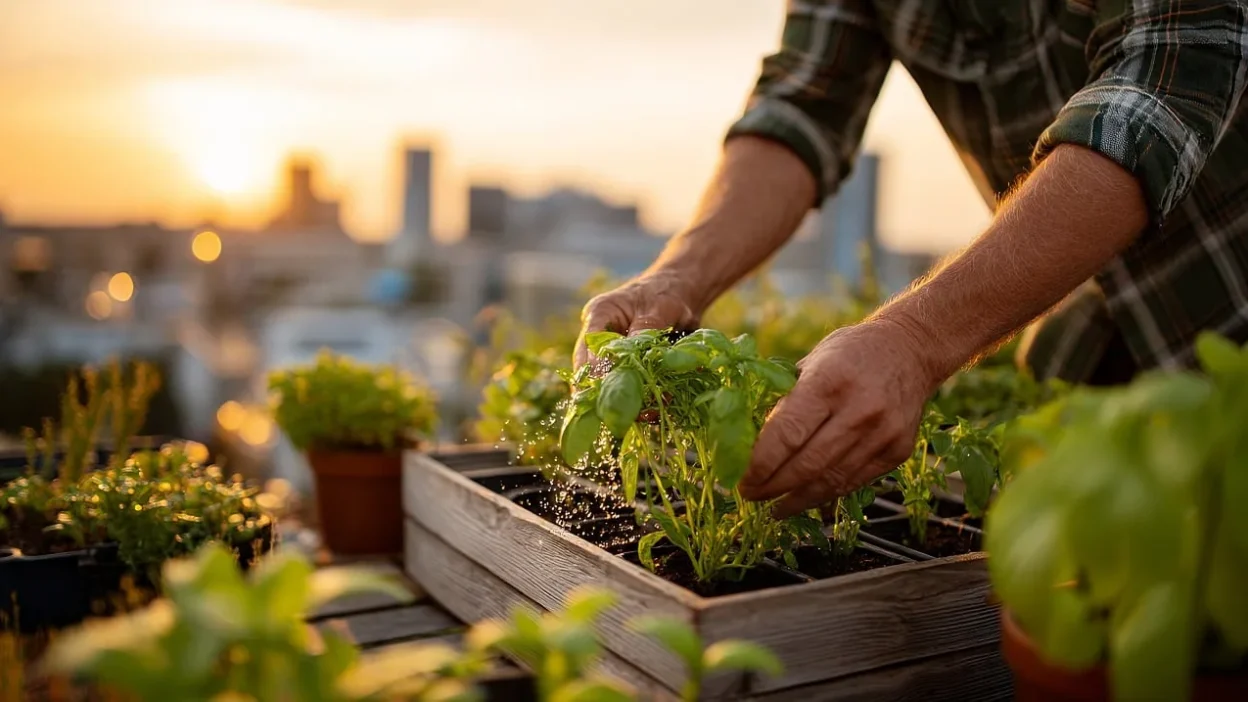
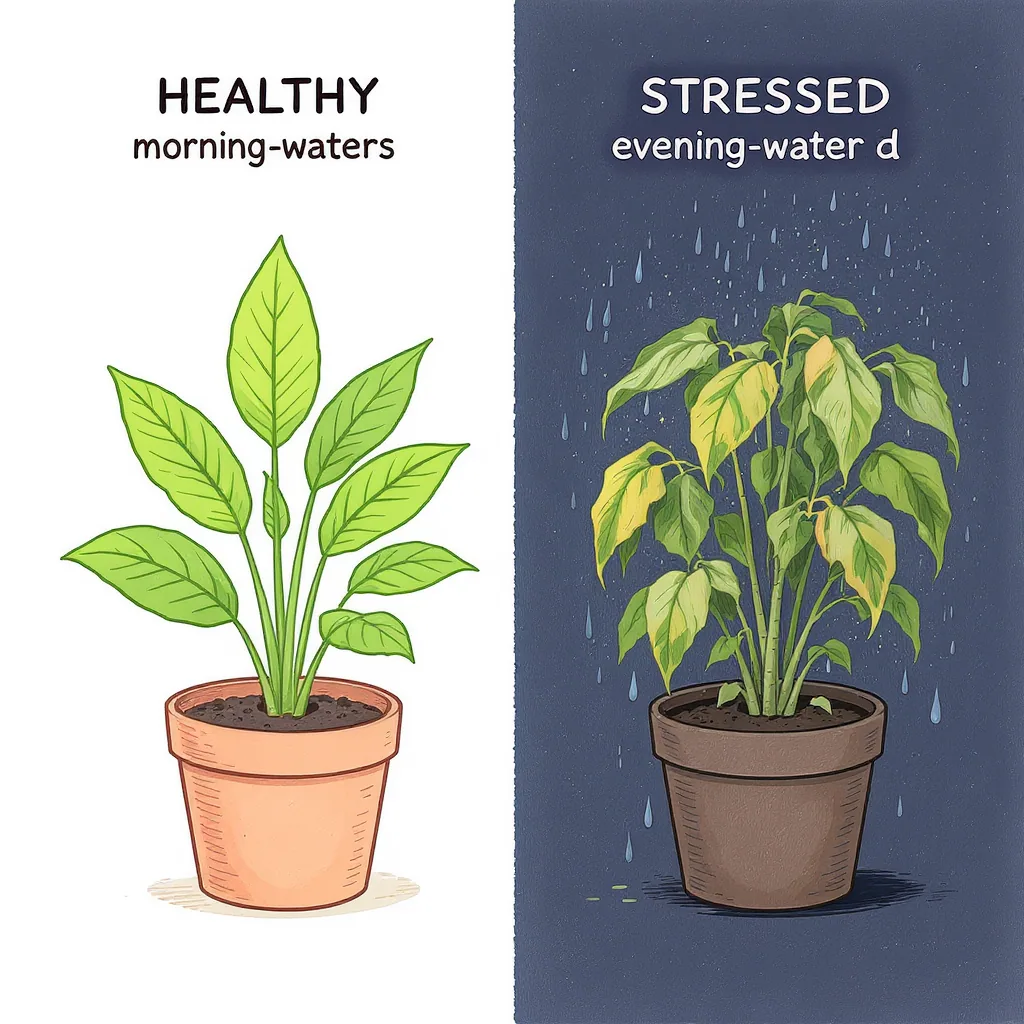
Watering in the morning gives plants a full reservoir to draw from as the sun rises and temperatures climb. This supports healthy transpiration. Crucially, any water that splashes onto the leaves has hours of sunlight and breeze to evaporate, leaving foliage dry by nightfall. This significantly reduces the risk of fungal diseases like powdery mildew and blight, which thrive in cool, damp conditions.
Watering in the evening, however, is championed for its efficiency in watering plants in hot weather. With the sun down, water has a chance to soak deep into the soil with far less loss to immediate evaporation. The downside? Leaves that get wet may stay damp for 10-12 hours overnight, creating a perfect environment for fungal spores to germinate.
The table below summarizes this key comparison to help you visualize the choice:
| Factor | Morning Watering | Evening Watering |
|---|---|---|
| Best For | Humid climates, plants prone to fungus (tomatoes, squash), heavy clay soil. | Hot, arid climates, sandy fast-draining soil, water conservation. |
| Primary Pro | Lowers disease risk by allowing foliage to dry quickly. | Reduces water loss to evaporation; efficient soak. |
| Primary Con | Some water can be lost to evaporation on hot days. | Increases risk of fungal diseases if foliage stays wet. |
| Practicality | Requires morning availability; can be a peaceful start to the day. | Fits a busy schedule; often when gardeners are home from work. |
Your Personal Watering Decision Tree
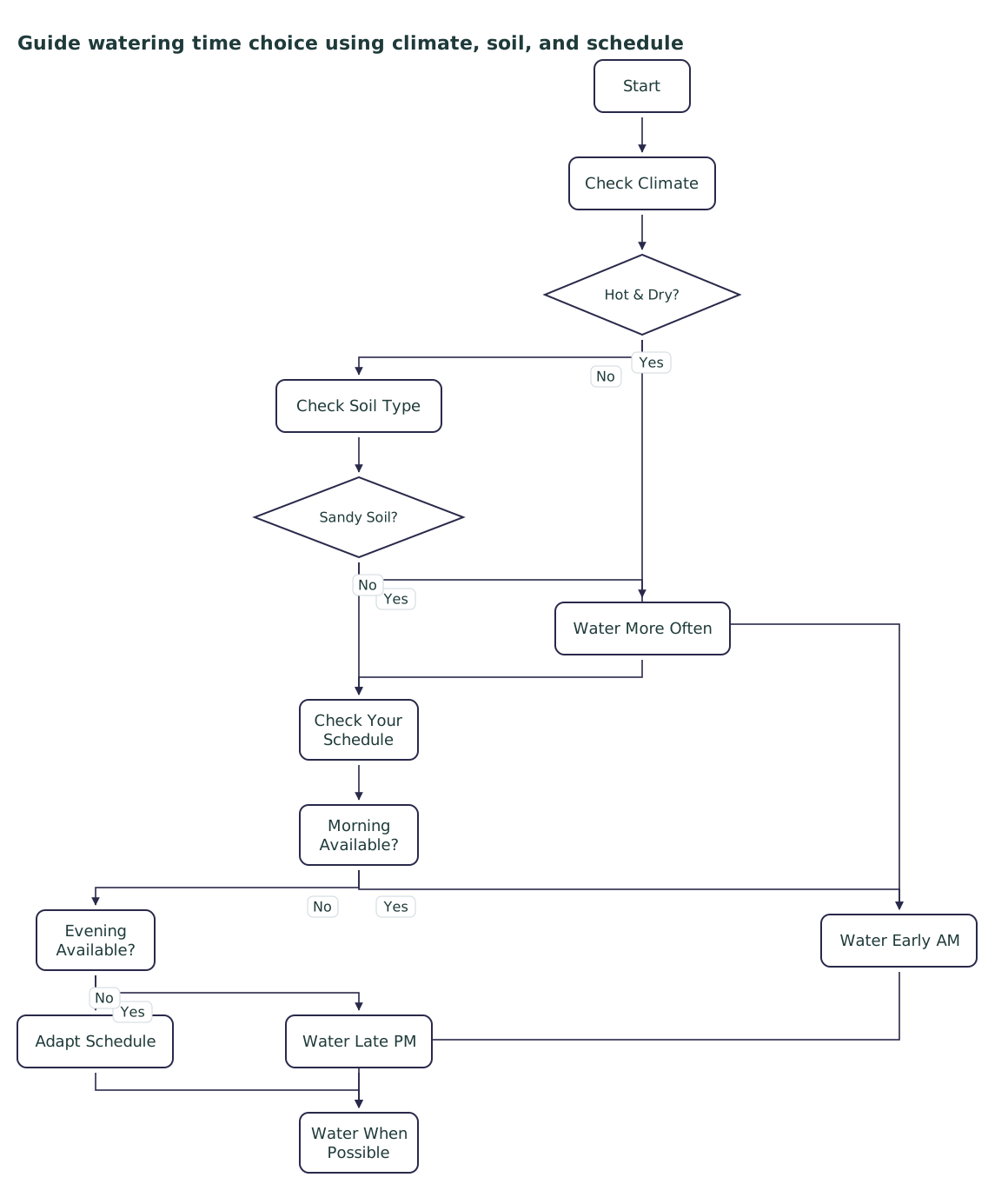
So, how do you choose? Instead of looking for one best time to water plants, run through these quick questions about your specific garden. Think of it as a personal decision tree, not a commandment.
What’s your local climate like? If you live in a consistently humid or cool area where dew lingers in the morning, the scales tip heavily toward morning watering. That extra moisture on leaves is a liability. If you’re in a hot, dry, windy region where water vanishes quickly, the water-saving benefit of evening watering becomes much more attractive.
What type of soil do you have? Heavy clay soil holds water for a long time. Watering it in the evening might keep it soggy overnight, which roots dislike. Sandy soil, on the other hand, drains so fast that a morning watering might not last through a scorching afternoon. Evening watering can help it retain moisture for the next day.
What are you growing? Some plants are fungal magnets. Tomatoes, squash, cucumbers, and roses are famous for this. If these are in your garden, err on the side of morning watering to keep their leaves dry. Deep-rooted, drought-tolerant plants like lavender or native perennials are less fussy.
What’s your real-life schedule? The watering schedule for new gardeners must be sustainable. If you’re never functional before 9 AM, forcing a morning routine will fail. It’s better to water consistently in the evening than sporadically in the morning. You can mitigate the disease risk by watering the soil directly, avoiding the leaves.
Scenario Spotlight: When to Break the ‘Rules’
Real gardening is messy, and sometimes the standard advice needs a tweak. Here are a few common scenarios where your optimal watering time for plants might shift.
Container Plants on a Hot Balcony or Patio: Pots dry out incredibly fast. In peak summer, a container watered in the morning can be parched by late afternoon, stressing the plant all night. In this case, a thorough evening watering ensures the plant has moisture to get through the night and into the next morning. The limited soil volume and exposure make evaporation the bigger enemy than disease.
Newly Seeded Lawns or Germinating Seedlings: These require consistently moist surface soil. A single morning watering on a hot, windy day often isn’t enough. A light, gentle evening watering can be crucial to keep the seedbed from drying out overnight, without the harsh midday sun baking it. Use a fine mist to avoid washing seeds away.
Watering Before a Predicted Heatwave: If you know tomorrow will be a scorcher, a deep, thorough morning watering acts like filling a cooler before a picnic. It charges the soil with moisture, helping plants regulate their temperature and reducing heat stress. This is a proactive use of morning watering as a protective measure.
Common Watering Mistakes (And How to Avoid Them)
While timing is important, it’s just one part of good watering. Here are frequent missteps new gardeners make, and how to fix them.
Mistake: Watering on a rigid calendar schedule. Watering every Tuesday and Friday, regardless of rain or heat, is a recipe for trouble. Plants’ needs change daily. Fix: Check the soil first. Stick your finger an inch or two into the dirt. If it’s dry, water. If it’s damp, wait. This simple habit is the cornerstone of a good watering frequency for beginners.
Mistake: Frequent, shallow sprinklings. Brief waterings only dampen the top inch of soil, encouraging roots to stay shallow and weak. Fix: Water deeply and less frequently. Apply water slowly so it soaks down 6-8 inches, encouraging deep, drought-resistant roots.
Mistake: Watering at the absolute worst time—midday. This is the lose-lose scenario. High evaporation wastes most of the water, and droplets on leaves can act like tiny magnifying glasses in intense sun, potentially scorching them. Fix: Stick to the morning or evening windows. If you must water midday, water the soil at the base of the plant only.
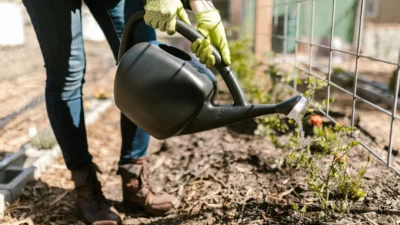
Mistake: Focusing on the leaves, not the roots. Plants drink from their roots. Soaking the foliage does little good and, as we’ve discussed, can cause harm. Fix: Aim your hose, watering can, or drip irrigation at the soil around the base of the plant. You can find helpful guides on effective drip irrigation techniques from university extension services, such as this one from the University of Minnesota Extension.
Finding Your Garden’s Rhythm
In the end, the “best” time to water isn’t a universal truth but a personal calculation. It’s the balance between your local weather, your garden’s soil and plants, and the reality of your daily life. If you’re in a humid area growing tomatoes, morning is your clear ally. If you’re in a desert climate with sandy soil and a 9-to-5 job, evening watering with careful aim at the soil is a perfectly smart strategy.
The most important step is to move away from anxiety over a single rule and toward observation. Watch how your plants respond. Feel your soil. Notice how quickly water disappears on a windy afternoon. Your garden will give you the feedback you need to adjust. Whether you choose the fresh start of a morning session or the quiet efficiency of an evening routine, consistent, deep watering done with attention will always beat a perfect theory applied poorly.