You’re ready to dig in, but your first trip down the garden tool aisle is a confusing mix of gleaming, expensive options and suspiciously cheap sets. This leaves every new gardener facing the same core dilemma: should you buy the cheapest tools just to get started, or is it smarter to invest in quality from day one? The truth is, there are two perfectly valid paths for beginners, each with its own trade-offs. Your best beginner garden tools budget isn’t about picking one extreme; it’s about making a series of smart, informed choices that balance immediate cost with long-term value, preventing frustration and wasted money. This guide will walk you through that exact decision-making process, showing you where quality is non-negotiable and where you can confidently save, so you can build a kit that lets your garden—and your confidence—grow.
The best way to build your first set of garden tools on a budget is to follow a hybrid approach. Invest in quality for high-use, high-stress items like a hand trowel, bypass pruners, and a digging shovel, where durability and performance matter most. For specialized tasks you’ll do infrequently, or for items you’re not sure you’ll need long-term, perfectly adequate budget options exist. This strategy prevents frustration and wasted money, letting you grow into gardening without breaking the bank.
The Two Beginner Paths: Defining Cheap vs. Quality
Let’s get specific about what we mean. In the garden tool aisle, “cheap” and “quality” aren’t just about price tags; they’re about materials, design, and lifespan. Understanding this difference is the first step to making a smart choice for your needs and budget.
The Minimalist Starter Path focuses on the lowest upfront cost. Tools in this category are often made with thinner, stamped metal, have plastic components in high-stress areas, and may feature hollow handles or poor ergonomics. The goal is to get you gardening immediately with the least financial outlay. The trade-off is that these tools can bend, rust quickly, or break with regular use, potentially leading to frustration and the need for replacement sooner.
The Long-Term Investor Path involves a higher initial investment for tools built to last. This means forged steel heads, solid hardwood or fiberglass handles, tight, secure connections, and designs that consider user comfort and efficiency. While you pay more now, these durable gardening tools for beginners become reliable partners for years, often backed by warranties. They make the work easier and safer from day one.
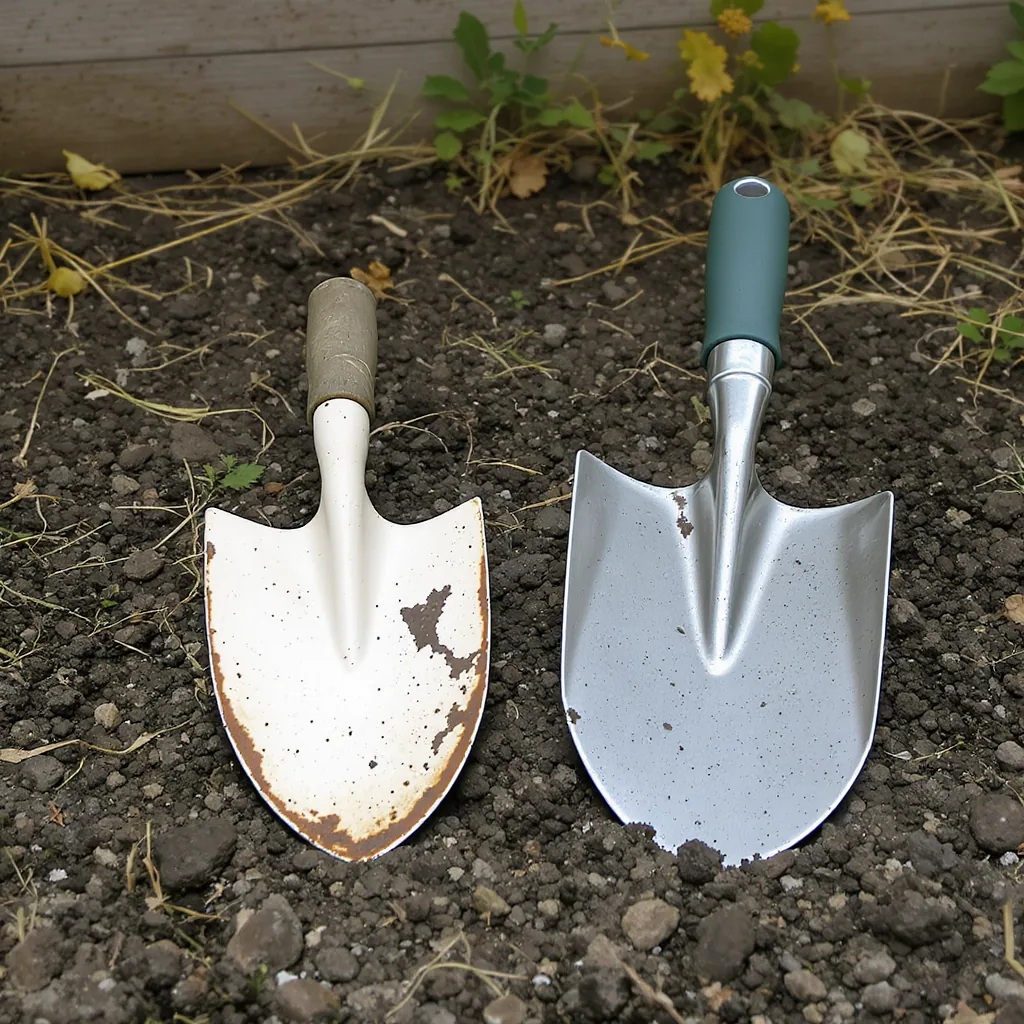
Neither path is “wrong.” Your choice depends on your confidence level, garden size, and how you view the activity. Are you testing the waters with a few containers, or are you committed to transforming a backyard? Your answer guides which philosophy makes sense for you right now.
Where Quality Is Non-Negotiable (Your Core Kit)
For a few essential tools, investing in quality isn’t a luxury—it’s a practical decision that pays off in performance, safety, and saved money over time. These are the workhorses you’ll use constantly, where failure is most frustrating (and potentially dangerous). This is your “buy once, cry once” shortlist.
1. Hand Trowel
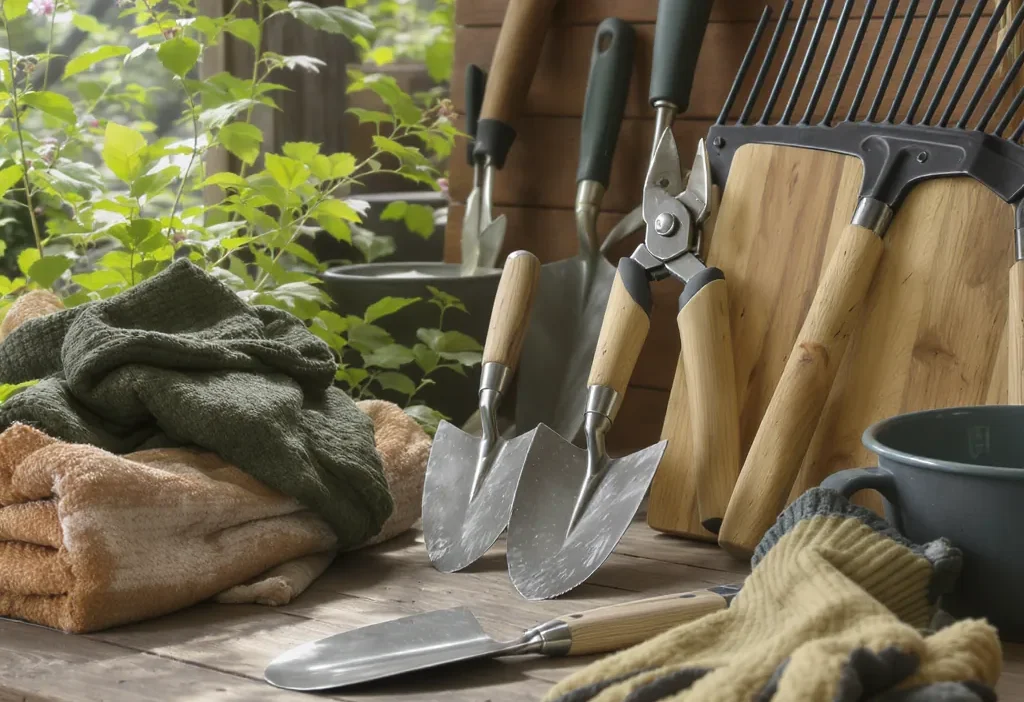
This is your garden’s extension of your hand. You’ll use it for planting, transplanting, and weeding daily. A cheap trowel with a thin, stamped blade will bend under pressure in tough soil, and its handle may snap or become uncomfortable. A quality trowel with a forged, one-piece stainless steel blade and a sturdy, ergonomic handle will feel like an effortless extension of your arm and last for decades.
2. Bypass Pruners (Secateurs)
Clean cuts are vital for plant health, preventing crushing and disease entry. Cheap anvil-style or poorly aligned bypass pruners will mash stems, harm your plants, and tire your hands. Investing in a good pair of bypass pruners ensures a sharp, precise scissor-cut every time. Look for replaceable blades and a comfortable grip—your plants and your hands will thank you.
3. A Digging Shovel or Spade
When you need to move earth, plant a shrub, or turn a bed, a flimsy shovel is a backache waiting to happen. It will bend at the neck (the “shaft”) or have a footrest that collapses. A quality digging tool with a solid, forged head and a full-length “tang” (the metal that runs into the handle) provides the leverage and strength you need. It turns a grueling task into manageable work, making it a critical piece of long-lasting garden tools for your kit.
Skimping on these core items often leads to buying them twice. The initial savings are quickly erased by replacement costs and the frustration of tools that fight you instead of helping you.
Where You Can Safely Save (The Budget-Friendly Zone)
Conversely, there are plenty of areas where choosing a budget garden tools option is a perfectly smart strategy. Saving here allows you to allocate more of your funds to the core quality items without guilt.
Specialized or Single-Use Tools
Do you need a hori-hori knife, a dibber for planting bulbs, or a dedicated transplanting trowel? If you’ll only use it a few times a season, a basic version is often sufficient. You can always upgrade later if you find yourself using it constantly.
Bulk & Disposable Items
Plant labels, nursery pots, seedling trays, and lightweight garden twine are consumables. There’s little benefit to buying the most expensive versions. Standard, affordable options work just fine.
“Test” Tools for Unsure Tasks
Not sure if you’ll love growing potatoes enough to warrant a potato fork? Starting with a budget option lets you try the technique without a major commitment. If the hobby sticks, you can invest in a better tool later with confidence.
Temporary or Seasonal Items
Frost cloth, simple row covers, or a basic watering can for a small balcony garden are items where function overrides long-term durability. A cost-effective choice gets the job done.
The key is intentionality. Saving in these areas isn’t about buying junk; it’s about recognizing that not every tool needs to be a heirloom-quality investment. This mindful approach is central to building a best beginner garden tools budget that works.
The Smart Hybrid Strategy: Building Your Starter Set
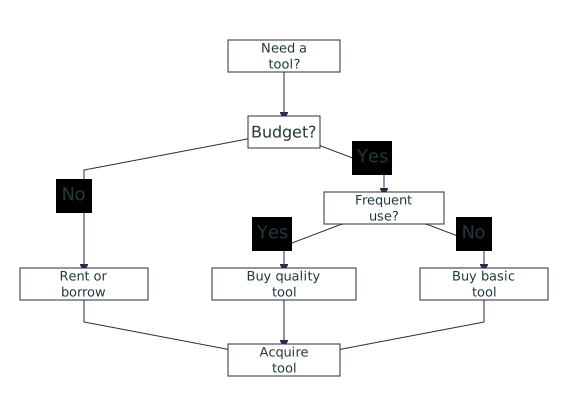
Most beginners find the most success with a hybrid approach. This isn’t about picking one path, but blending them strategically based on your specific plans. Here’s a simple, actionable framework.
- List Your First-Season Tasks: Write down what you actually plan to do (e.g., “plant vegetables in two raised beds,” “prune two rose bushes,” “start seeds indoors”).
- Identify Your Core Tools: From your list, highlight the tools you’ll use for high-frequency, high-effort tasks. These are your quality investment targets (likely your trowel, pruners, and a shovel).
- Allocate Your Budget Accordingly: Dedicate the majority of your tool budget to purchasing the best versions of these core items you can afford.
- Fill In the Gaps with Budget Options: For the remaining, specialized, or “nice-to-have” tools on your list, seek out adequate, affordable versions.
When evaluating any tool—cheap or costly—use this quick mental checklist: How does it feel in your hand? Is it balanced? Are the joints tight with no wiggle? Does it come with any kind of warranty? A few minutes of hands-on assessment can reveal a lot about its likely lifespan.
This hybrid strategy prevents analysis paralysis. It gives you permission to spend wisely on what matters most and save pragmatically on the rest, creating a starter kit that is both functional and financially sensible. For more on evaluating tool ergonomics and design, resources from university extension services, like this guide from the University of Minnesota Extension, offer excellent, unbiased advice.
Start Gardening, Not Overthinking
The choice between cheap and quality garden tools isn’t a binary one. It’s a spectrum where your personal context—your garden’s size, your physical needs, and your budget—determines the smartest mix. The goal isn’t to have the perfect set on day one, but to have a functional set that lets you start learning and growing without fear.
By investing thoughtfully in a few core, high-use tools and being pragmatic about the rest, you build a foundation that supports your new hobby. Tools can be upgraded over time as your passion and skills deepen. The most important step is to begin. Grab a quality trowel, a sensible budget pruner if needed, and get your hands in the soil. The garden, and your journey, are waiting.