There’s a special kind of garden heartbreak that happens around midsummer. You started with such hope, carefully planting your seeds and seedlings, only to watch your tomato plants become a tangled, disease-prone jungle, your carrots stay spindly and stunted, and your zucchini leaves form an impenetrable canopy that blocks the sun from everything else. The culprit is almost never a lack of care, but a simple, preventable planning error: poor spacing. For a beginner, garden layout feels like a guessing game, leading to the twin disasters of overcrowding, which breeds competition and disease, or underplanting, which wastes precious space and yield. The good news is that you don’t need a degree in horticulture to get it right. By following a few foundational, non-negotiable rules, you can design a beginner garden layout that gives every plant the room it needs to thrive, turning potential frustration into your first real harvest.
A successful beginner garden layout prevents failure by following three simple spacing rules: use the spacing on the seed packet or plant tag as your non-negotiable starting point, always plan for the plant’s mature width, and use a ruler, tape measure, or pre-marked grid to avoid guessing. This stops overcrowding before it starts, ensuring plants have adequate access to light, air, and nutrients. Sticking to this protocol is the simplest and most effective form of garden insurance for a first-time grower.
The 3 Non-Negotiable Spacing Rules for Beginners
Forget complex garden design theories. A successful, easy garden layout for beginners comes down to three simple, non-negotiable rules. Think of them as your garden insurance policy—they prevent problems before your seeds even hit the soil.
Rule 1: Trust the Tag or Seed Packet
This is your single most reliable source of truth. The spacing recommendation printed on the seed packet or plant tag is not a suggestion; it’s the result of the plant breeder’s or grower’s experience. It tells you the minimum distance needed for that specific variety to thrive. A common garden spacing for beginners mistake is thinking “they look small now, I can squeeze them closer.” Don’t. Use this information as your non-negotiable starting point for your simple garden design.
Rule 2: Plan for the Plant’s Mature Size
You are not planting a seedling; you are planting a full-grown tomato bush or a sprawling zucchini plant. Always visualize the plant at its peak width and height. That tiny pepper start will become a 2-foot-wide bush. Planting with only its current size in mind is the fastest route to a tangled, unhappy garden. This forward-thinking is the core of intelligent backyard garden planning.
Rule 3: Measure, Don’t Guess
Eyeballing distances leads to inconsistency and crowding. Use a physical tool. A tape measure is ideal, but a ruler, a pre-marked stick, or even your own foot (knowing your shoe size) is better than guessing. For raised bed layout or square foot gardening spacing, creating a simple grid with string or a marked board takes the uncertainty out completely. This simple act of measurement transforms an abstract plan into a foolproof reality.
A Simple Spacing Guide for Common Vegetables
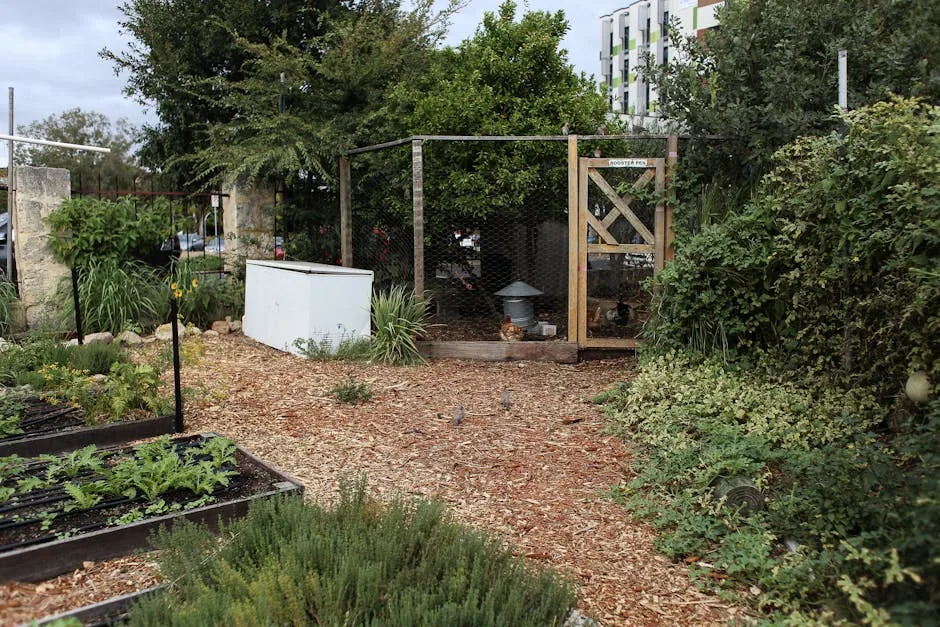
Photo by Rachel Claire on Pexels
While Rule 1 (trust the packet) always wins, this quick-reference guide gives you a ballpark for popular starter crops. Use it for initial planning, but always double-check your specific variety.
Plants That Need More Room (12-24+ inches apart):
- Tomatoes: 18-24 inches apart for determinate types; 24-36 inches for sprawling indeterminates.
- Peppers (Bell/Hot): 18-24 inches apart. They benefit from good air circulation.
- Zucchini/Summer Squash: 24-36 inches apart. They become large, leafy plants.
- Cabbage, Broccoli, Cauliflower: 12-18 inches apart. They need space for their heads to form.
Plants You Can Place Closer (4-12 inches apart):
- Lettuce & Leafy Greens: 6-12 inches apart. You can even harvest young “thinnings” for salads.
- Carrots & Radishes: 2-4 inches apart in rows that are 12 inches apart. Thin seedlings early!
- Bush Beans: 4-6 inches apart in rows. They grow upright and don’t sprawl.
- Beets & Turnips: 3-6 inches apart. Thin to the strongest seedling.
The Most Common Spacing Mistakes (And How to Avoid Them)
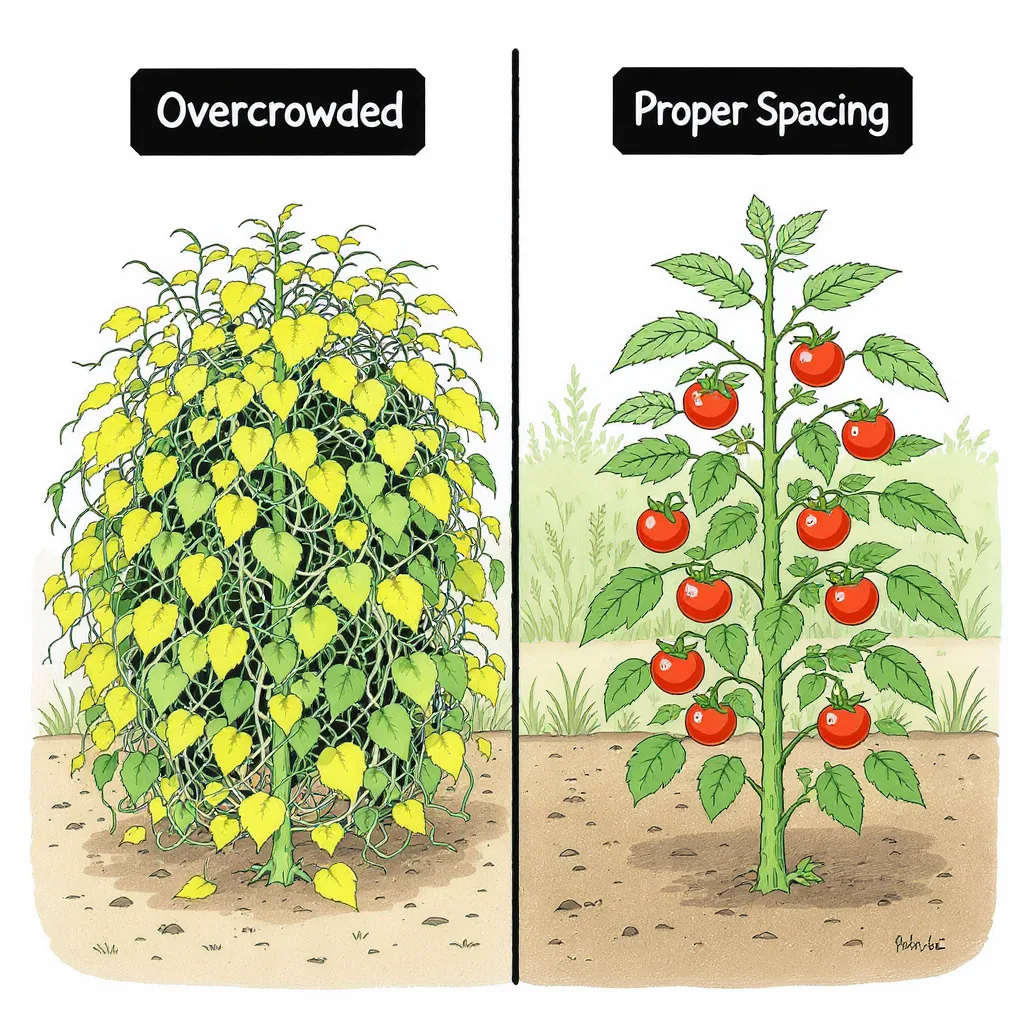
Seeing where others go wrong is a powerful teacher. Here are the predictable errors in garden spacing for beginners and the simple fixes to implement instead.
Mistake: Ignoring the Packet & Planting Too Close
The Fix: Before you dig a single hole, read every packet and tag. Write the spacing requirement next to each plant on your list. This creates a custom plant spacing guide for your exact garden.
Mistake: Planting in Single-File Rows Without Considering Width
The Fix: Use a staggered or grid pattern. If a plant needs 12 inches of space, it needs that space in all directions. Planting in a grid, rather than a skinny row, maximizes your yield in a small area and is a cornerstone of square foot gardening spacing.
Mistake: Forgetting About Pathways and Your Own Reach
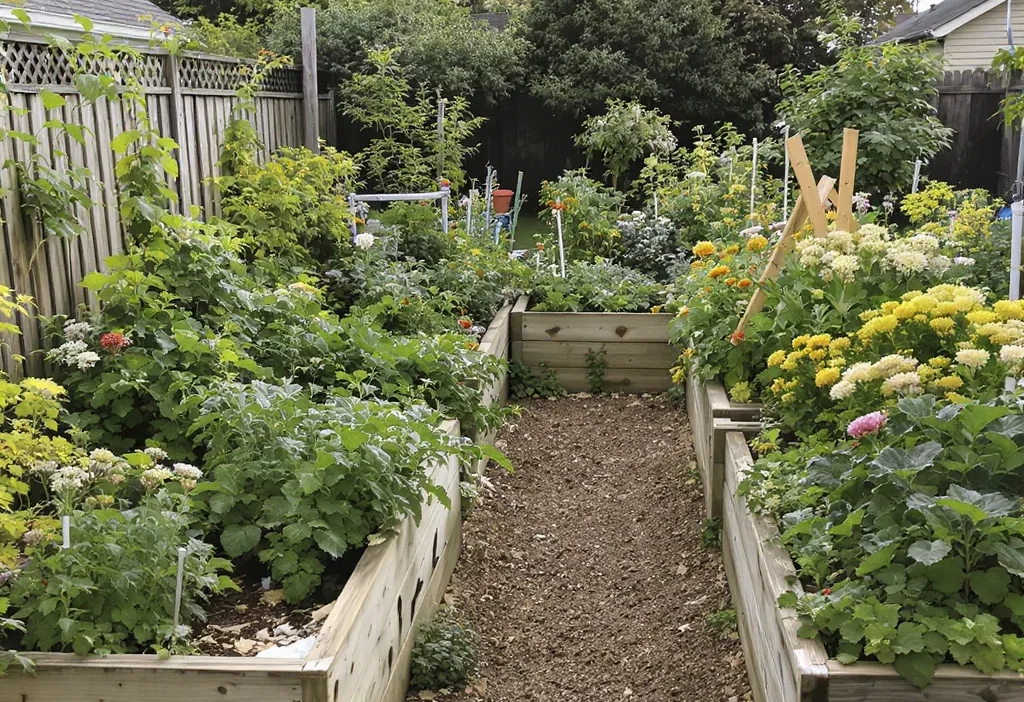
The Fix: Leave 18-24 inches between beds or rows for walking, kneeling, and harvesting. Nothing is more frustrating than trampling plants because you can’t reach the center of your bed. Plan your access from day one.
Mistake: Mixing Plants with Wildly Different Needs
The Fix: Group plants with similar spacing and water needs. Don’t plant a thirsty, sprawling cucumber right next to a drought-tolerant, compact carrot patch. This makes watering and care more efficient and prevents larger plants from shading out smaller ones.
Your Quick-Start Layout Action Plan
Let’s turn these rules into action. Follow this simple four-step plan to translate your easy garden layout ideas into a tangible, mistake-proof map.
Step 1: Make Your Plant List
Write down every vegetable, herb, or flower you intend to grow. This is your master list.
Step 2: Note the Spacing for Each
Next to each plant on your list, write the “Spacing: ___ inches” from the seed packet or tag. This is the most critical data collection step.
Step 3: Sketch a Simple Grid
Grab graph paper or use a notes app. Draw the outline of your garden bed or plot. Using your spacing notes, draw circles or squares to represent each plant at its mature size. This visual sketch instantly reveals if you’re trying to fit too much in.
Step 4: Mark Your Spots Before Planting
Take your sketch to the garden. Use a tape measure and some simple markers—like popsicle sticks, small stones, or a dab of flour—to physically mark the center point for each plant before you dig a single hole. This final step locks in your plan and eliminates last-minute guesswork.
Spacing is the one aspect of gardening you have complete control over from the start. By taking an hour to plan and measure, you give your plants—and yourself—the best possible chance for a rewarding, abundant season.
Start Your Garden with Confidence
Think of proper spacing as the simplest, most effective form of garden insurance. It’s a one-time investment of planning that pays off all season long by preventing competition for sunlight, water, and nutrients. You’ve now moved from uncertainty to having a clear, actionable protocol. The most common pitfalls are mapped out, and your straightforward action plan is ready. The difference between a struggling patch and a thriving garden often comes down to the space you give your plants from the very beginning. So, gather your seed packets, grab a tape measure, and sketch your first, intentionally spaced layout today. Your future harvest will thank you.